
Leyla Erenay
Mobile App
UI/UX Design
2025


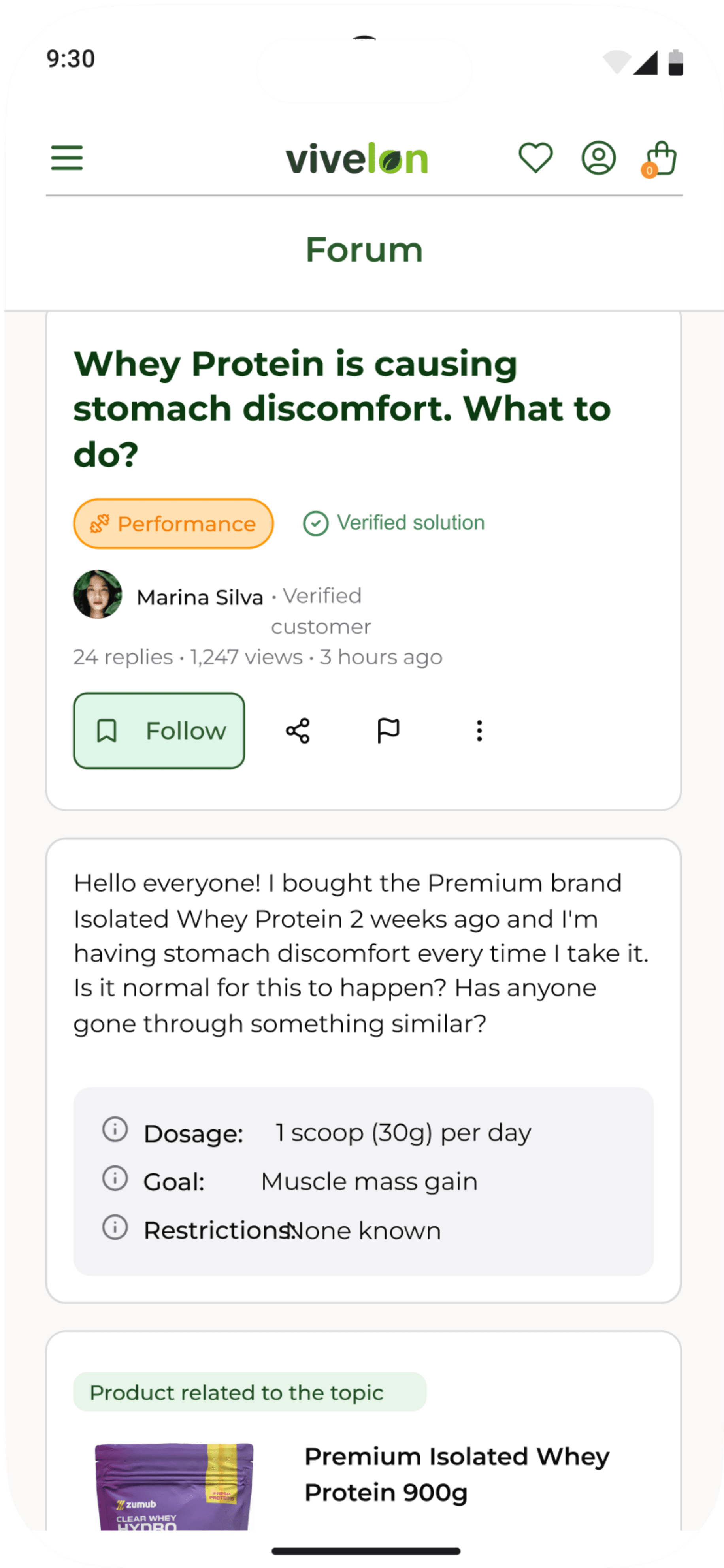
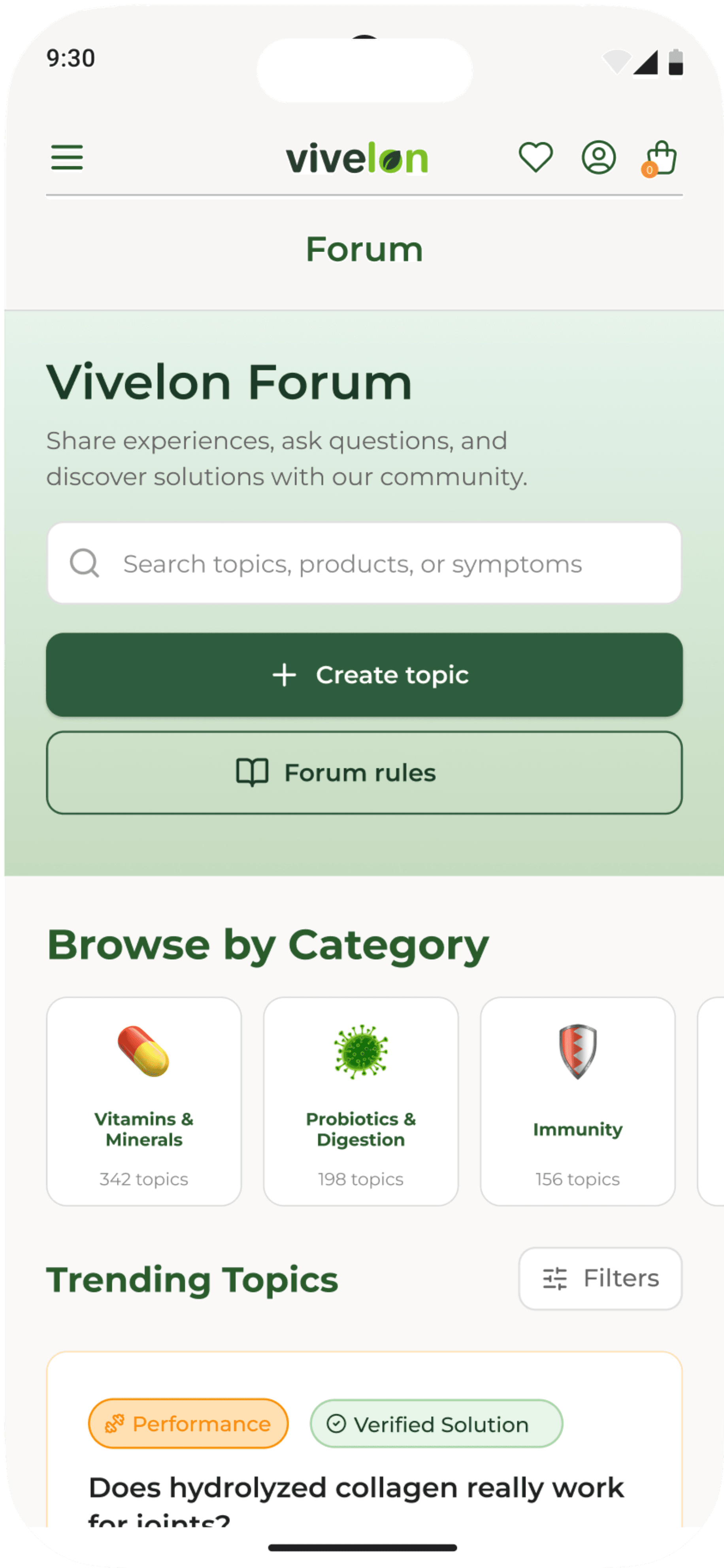
Vivelon is a wellness e-commerce platform enhanced with community and expert support.
Leyla Erenay
Mobile App
UI/UX Design
2025
Vivelon is a wellness e-commerce platform enhanced with community and expert support.
Leyla Erenay
Mobile App
UI/UX Design
2025
Vivelon is a wellness e-commerce platform enhanced with community and expert support.

About
the Project
About
the Project
About
the Project
Vivelon is a wellness e-commerce platform focused on organic, health-forward products.
This project explores how community insight and expert guidance can be integrated into a traditional shopping experience to support more confident, informed wellness decisions.
Vivelon is a wellness e-commerce platform focused on organic, health-forward products.
This project explores how community insight and expert guidance can be integrated into a traditional shopping experience to support more confident, informed wellness decisions.
Vivelon is a wellness e-commerce platform focused on organic, health-forward products.
This project explores how community insight and expert guidance can be integrated into a traditional shopping experience to support more confident, informed wellness decisions.
Find wellness products
Find wellness products
Find wellness products
Users browse and purchase products through a familiar e-commerce flow.
Users browse and purchase products through a familiar e-commerce flow.
Users browse and purchase products through a familiar e-commerce flow.
Ask specialists & experts
Ask specialists & experts
Ask specialists & experts
Access to certified professionals allows users to clarify doubts about ingredients, sensitivities, and expected outcomes.
Access to certified professionals allows users to clarify doubts about ingredients, sensitivities, and expected outcomes.
Access to certified professionals allows users to clarify doubts about ingredients, sensitivities, and expected outcomes.
Learn from the community
Learn from the community
Learn from the community
Product-linked forums surface real experiences, nuanced questions, and contextual understanding.
Product-linked forums surface real experiences, nuanced questions, and contextual understanding.
Product-linked forums surface real experiences, nuanced questions, and contextual understanding.

Project Overview
Project: Vivelon — Wellness E-commerce Platform
Type: Collaborative, real-world design project
Role: UX Designer (Community, Trust & Decision-Making)
My Contribution
I focused on designing the community and trust-building layer of the Vivelon experience. My work centered on understanding moments of user hesitation and translating them into design strategies that support reassurance, clarity, and informed decision-making.
Specifically,
I contributed by:
Designing a product-linked forum to surface lived experiences
Mapping user hesitation, reassurance, and validation moments across the decision journey
Supporting confidence-building through community insight and expert validation
Project Overview
Project: Vivelon — Wellness E-commerce Platform
Type: Collaborative, real-world design project
Role: UX Designer (Community, Trust & Decision-Making)
My Contribution
I focused on designing the community and trust-building layer of the Vivelon experience. My work centered on understanding moments of user hesitation and translating them into design strategies that support reassurance, clarity, and informed decision-making.
Specifically,
I contributed by:
Designing a product-linked forum to surface lived experiences
Mapping user hesitation, reassurance, and validation moments across the decision journey
Supporting confidence-building through community insight and expert validation
Project Overview
Project: Vivelon — Wellness E-commerce Platform
Type: Collaborative, real-world design project
Role: UX Designer (Community, Trust & Decision-Making)
My Contribution
I focused on designing the community and trust-building layer of the Vivelon experience. My work centered on understanding moments of user hesitation and translating them into design strategies that support reassurance, clarity, and informed decision-making.
Specifically,
I contributed by:
Designing a product-linked forum to surface lived experiences
Mapping user hesitation, reassurance, and validation moments across the decision journey
Supporting confidence-building through community insight and expert validation

Case Study Focus
This case study explores how trust, reassurance, and shared experiences can be integrated into a traditional wellness e-commerce flow to support confident, low-pressure decisions.
Case Study Focus
This case study explores how trust, reassurance, and shared experiences can be integrated into a traditional wellness e-commerce flow to support confident, low-pressure decisions.
Case Study Focus
This case study explores how trust, reassurance, and shared experiences can be integrated into a traditional wellness e-commerce flow to support confident, low-pressure decisions.

Problem Statement
Wellness users often struggle to make confident decisions because health information alone does not address personal sensitivities or individual contexts.
Product descriptions tend to be generic and rarely explain how a product might affect someone with specific concerns. As a result, users lack:
A space to ask nuanced questions
Access to relatable experiences
Validation before committing to a purchase
This uncertainty often leads to hesitation, delayed decisions, or abandonment.

Problem Statement
Wellness users often struggle to make confident decisions because health information alone does not address personal sensitivities or individual contexts.
Product descriptions tend to be generic and rarely explain how a product might affect someone with specific concerns. As a result, users lack:
A space to ask nuanced questions
Access to relatable experiences
Validation before committing to a purchase
This uncertainty often leads to hesitation, delayed decisions, or abandonment.
Problem Statement
Wellness users often struggle to make confident decisions because health information alone does not address personal sensitivities or individual contexts.
Product descriptions tend to be generic and rarely explain how a product might affect someone with specific concerns. As a result, users lack:
A space to ask nuanced questions
Access to relatable experiences
Validation before committing to a purchase
This uncertainty often leads to hesitation, delayed decisions, or abandonment.

Proposed Solution
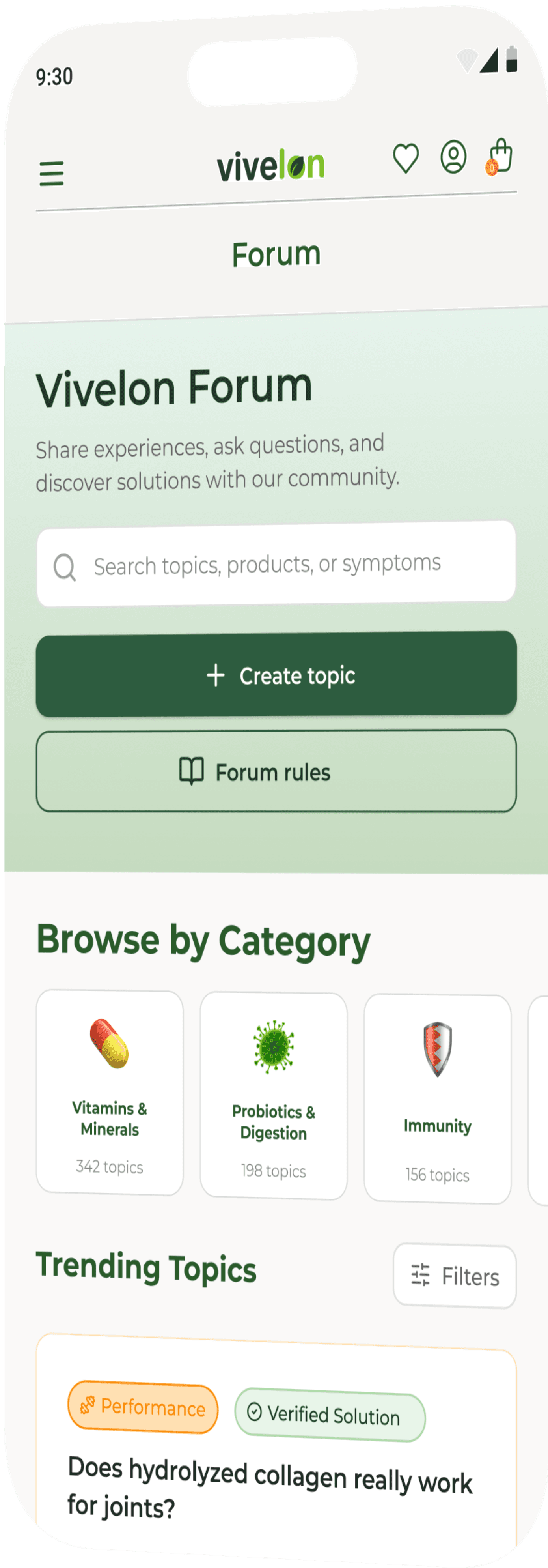
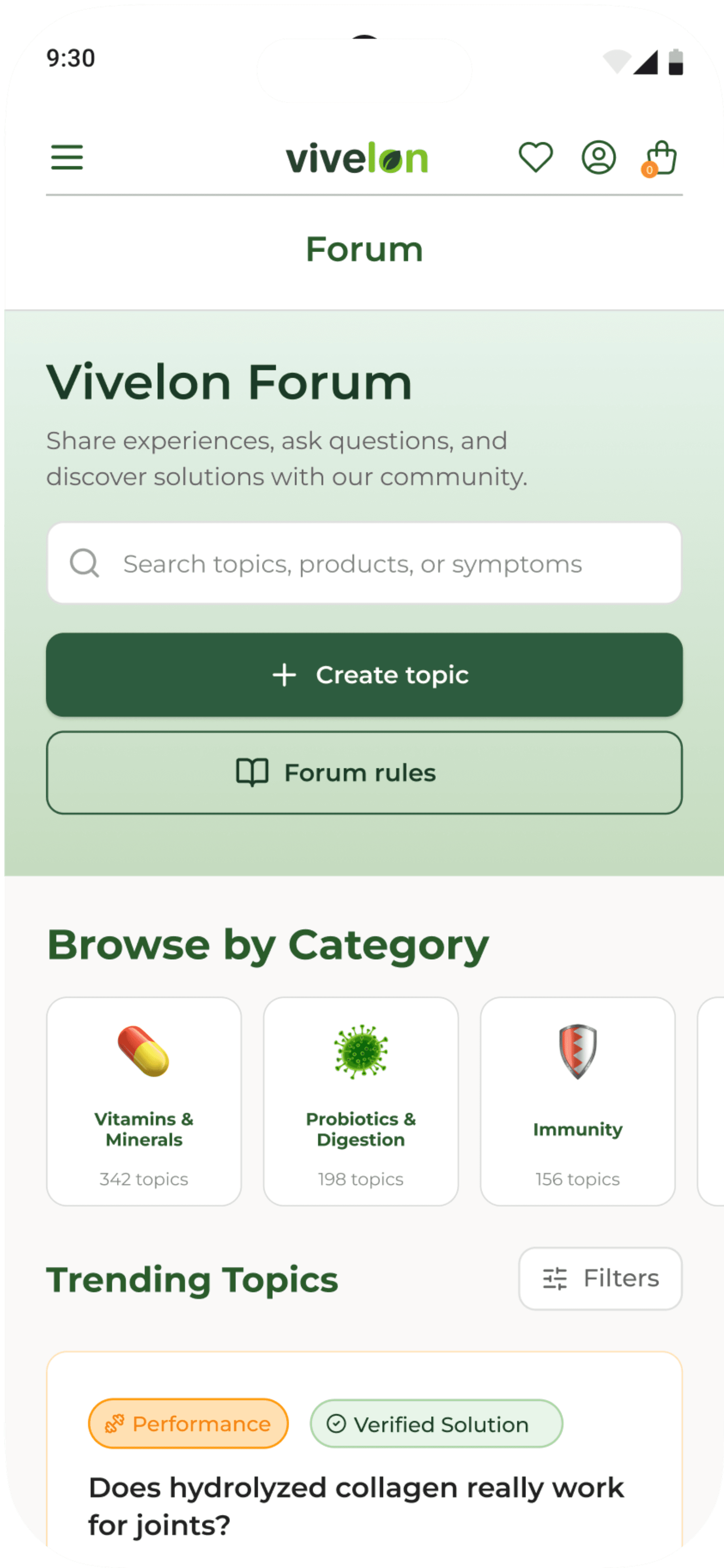
To address these challenges, the solution introduced a product-linked forum integrated directly into the product experience.
The forum enables users to:
Ask open-ended questions
Read real experiences from other users
Receive guidance from specialists
Enable thoughtful decision-making over time
Reduce uncertainty around health-related choices
Build trust through clarity and expert cues
Support informed decision-making at the user’s own pace
Proposed Solution
To address these challenges, the solution introduced a product-linked forum integrated directly into the product experience.
The forum enables users to:
Ask open-ended questions
Read real experiences from other users
Receive guidance from specialists
Enable thoughtful decision-making over time
Reduce uncertainty around health-related choices
Build trust through clarity and expert cues
Support informed decision-making at the user’s own pace
Proposed Solution
To address these challenges, the solution introduced a product-linked forum integrated directly into the product experience.
The forum enables users to:
Ask open-ended questions
Read real experiences from other users
Receive guidance from specialists
Enable thoughtful decision-making over time
Reduce uncertainty around health-related choices
Build trust through clarity and expert cues
Support informed decision-making at the user’s own pace

Research Approach
The goal of this project was to design an experience that supports confidence and reassurance, especially for users with personal sensitivities.
To achieve this, I followed a research-driven design approach that combined:
Competitive analysis of existing wellness platforms
Persona development focused on trust and hesitation behaviors
Behavioral exploration of how users seek reassurance and validation
The research focused on identifying moments of hesitation and the forms of reassurance users rely on when evaluating wellness products.
Research Approach
The goal of this project was to design an experience that supports confidence and reassurance, especially for users with personal sensitivities.
To achieve this, I followed a research-driven design approach that combined:
Competitive analysis of existing wellness platforms
Persona development focused on trust and hesitation behaviors
Behavioral exploration of how users seek reassurance and validation
The research focused on identifying moments of hesitation and the forms of reassurance users rely on when evaluating wellness products.
Research Approach
The goal of this project was to design an experience that supports confidence and reassurance, especially for users with personal sensitivities.
To achieve this, I followed a research-driven design approach that combined:
Competitive analysis of existing wellness platforms
Persona development focused on trust and hesitation behaviors
Behavioral exploration of how users seek reassurance and validation
The research focused on identifying moments of hesitation and the forms of reassurance users rely on when evaluating wellness products.

User Persona
User Persona
User Persona
We defined a baseline wellness user and iteratively refined personas using AI-assisted behavioral modeling to examine decision-making, hesitation, and trust formation.
We defined a baseline wellness user and iteratively refined personas using AI-assisted behavioral modeling to examine decision-making, hesitation, and trust formation.
We defined a baseline wellness user and iteratively refined personas using AI-assisted behavioral modeling to examine decision-making, hesitation, and trust formation.
Ana was selected as the primary persona representing this trust-sensitive behavior and served as the guiding lens for design decisions.
Ana was selected as the primary persona representing this trust-sensitive behavior and served as the guiding lens for design decisions.
Ana was selected as the primary persona representing this trust-sensitive behavior and served as the guiding lens for design decisions.
This process emphasized behavioral patterns over demographics and revealed a recurring need for reassurance in wellness decisions.
This process emphasized behavioral patterns over demographics and revealed a recurring need for reassurance in wellness decisions.
This process emphasized behavioral patterns over demographics and revealed a recurring need for reassurance in wellness decisions.

Ana
Ana
Ana
34 years old
34 years old
34 years old
Health-concious
Health-concious
Health-concious
Product manager
Product manager
Product manager
Lisbon
Lisbon
Lisbon
Context
Ana experiences daily bloating that affects her energy and focus at work. She actively seeks wellness solutions but hesitates to commit after past experiences with generic products that did not work.
Context
Ana experiences daily bloating that affects her energy and focus at work. She actively seeks wellness solutions but hesitates to commit after past experiences with generic products that did not work.
Context
Ana experiences daily bloating that affects her energy and focus at work. She actively seeks wellness solutions but hesitates to commit after past experiences with generic products that did not work.
Trust Behavior
Trust Behavior
Trust Behavior
Ana builds trust first through real user experiences, followed by clear expert validation. She avoids vague claims and prefers transparency around ingredients, realistic timelines, and low-pressure decision-making.
Ana builds trust first through real user experiences, followed by clear expert validation. She avoids vague claims and prefers transparency around ingredients, realistic timelines, and low-pressure decision-making.
Ana builds trust first through real user experiences, followed by clear expert validation. She avoids vague claims and prefers transparency around ingredients, realistic timelines, and low-pressure decision-making.
Core Need
Core Need
Core Need
Confidence that a product is relevant, safe, and worth trying.
Confidence that a product is relevant, safe, and worth trying.
Confidence that a product is relevant, safe, and worth trying.
Decision Criteria
Decision Criteria
Decision Criteria
Ana moves forward only when she sees relatable user experiences and understand expert explanations early. Otherwise, she delays and returns later.
Ana moves forward only when she sees relatable user experiences and understand expert explanations early. Otherwise, she delays and returns later.
Ana moves forward only when she sees relatable user experiences and understand expert explanations early. Otherwise, she delays and returns later.

Defining the Solution Strategy
An analysis of existing wellness e-commerce platforms revealed consistent gaps in how user hesitation is supported during decision-making.
Defining the Solution Strategy
An analysis of existing wellness e-commerce platforms revealed consistent gaps in how user hesitation is supported during decision-making.
Defining the Solution Strategy
An analysis of existing wellness e-commerce platforms revealed consistent gaps in how user hesitation is supported during decision-making.

Stage
Concern
Hesitation
Reassurance
Validation
Decision
User mindset
“I have a sensitive stomach”
“Will this actually work for someone like me?”
“Others with similar issues shared their experiences”
“An expert explains risks, expectations, and timelines”
“I feel safe to try or return later if needed
Design response
Product discovery
Product-linked forum discussions
Community comments from similar users
Certified expert answers
Context-aware product recommendation
Stage
Concern
Hesitation
Reassurance
Validation
Decision
User mindset
“I have a sensitive stomach”
“Will this actually work for someone like me?”
“Others with similar issues shared their experiences”
“An expert explains risks, expectations, and timelines”
“I feel safe to try or return later if needed
Design response
Product discovery
Product-linked forum discussions
Community comments from similar users
Certified expert answers
Context-aware product recommendation
Stage
Concern
Hesitation
Reassurance
Validation
Decision
User mindset
“I have a sensitive stomach”
“Will this actually work for someone like me?”
“Others with similar issues shared their experiences”
“An expert explains risks, expectations, and timelines”
“I feel safe to try or return later if needed
Design response
Product discovery
Product-linked forum discussions
Community comments from similar users
Certified expert answers
Context-aware product recommendation
”
”
”
Competitor Anal
Competitor Anal
Competitor Anal
Community & Social Proof Integration
Community & Social Proof Integration
Community & Social Proof Integration
Educational content and wellness tips
Educational content and wellness tips
Educational content and wellness tips
Decision Support
Decision Support
Decision Support
Role of AI (Customer-Facing)
Role of AI (Customer-Facing)
Role of AI (Customer-Facing)
Prozis
Prozis
Prozis
Reviews exist but are isolated from guidance or expert context.
Reviews exist but are isolated from guidance or expert context.
Reviews exist but are isolated from guidance or expert context.
No structured or guided education; information exists only within product marketing.
No structured or guided education; information exists only within product marketing.
No structured or guided education; information exists only within product marketing.
Little guidance for choosing between similar options or assessing suitability.
Little guidance for choosing between similar options or assessing suitability.
Little guidance for choosing between similar options or assessing suitability.
Farmácias Saúde
Farmácias Saúde
Farmácias Saúde
Limited community presence; trust relies on institutional credibility.
Limited community presence; trust relies on institutional credibility.
Limited community presence; trust relies on institutional credibility.
Heavy and clinical, focusing on product descriptions rather than explaining how or why products help
Heavy and clinical, focusing on product descriptions rather than explaining how or why products help
Heavy and clinical, focusing on product descriptions rather than explaining how or why products help
Clinical information without clear support for translating details into personal decisions.
Clinical information without clear support for translating details into personal decisions.
Clinical information without clear support for translating details into personal decisions.
iHerb
iHerb
iHerb
Extensive reviews, but unstructured and difficult to interpret for specific concerns.
Extensive reviews, but unstructured and difficult to interpret for specific concerns.
Extensive reviews, but unstructured and difficult to interpret for specific concerns.
Through customer reviews and comments, but remains unstructured requiring users to interpret.
Through customer reviews and comments, but remains unstructured requiring users to interpret.
Through customer reviews and comments, but remains unstructured requiring users to interpret.
Filters and reviews provide breadth, but require users to interpret relevance on their own.
Filters and reviews provide breadth, but require users to interpret relevance on their own.
Filters and reviews provide breadth, but require users to interpret relevance on their own.
Celeiro
Celeiro
Celeiro
Minimal user-generated insight.
Minimal user-generated insight.
Minimal user-generated insight.
Is minimal and primarily embedded within brand offering limited support for deeper understanding.
Is minimal and primarily embedded within brand offering limited support for deeper understanding.
Is minimal and primarily embedded within brand offering limited support for deeper understanding.
High-level benefits presented with the assumption of prior user knowledge.
High-level benefits presented with the assumption of prior user knowledge.
High-level benefits presented with the assumption of prior user knowledge.
Key Insight Derived
Key Insight Derived
Key Insight Derived
Product information is widely available, but users receive little support in interpreting relevance, risk, or suitability.
Community insight and expert guidance are fragmented, leaving users to resolve uncertainty independently.
Users are left to resolve uncertainty on their own.
Product information is widely available, but users receive little support in interpreting relevance, risk, or suitability.
Community insight and expert guidance are fragmented, leaving users to resolve uncertainty independently.
Users are left to resolve uncertainty on their own.
Product information is widely available, but users receive little support in interpreting relevance, risk, or suitability.
Community insight and expert guidance are fragmented, leaving users to resolve uncertainty independently.
Users are left to resolve uncertainty on their own.
These gaps reinforced the need for an experience that supports context, reassurance, and shared understanding before commitment.
These gaps reinforced the need for an experience that supports context, reassurance, and shared understanding before commitment.
These gaps reinforced the need for an experience that supports context, reassurance, and shared understanding before commitment.
Rather than adding features, the focus was on supporting users at moments of hesitation.
I mapped the user’s decision-making journey, identifying where reassurance could gradually resolve uncertainty.
Rather than adding features, the focus was on supporting users at moments of hesitation.
I mapped the user’s decision-making journey, identifying where reassurance could gradually resolve uncertainty.
Rather than adding features, the focus was on supporting users at moments of hesitation.
I mapped the user’s decision-making journey, identifying where reassurance could gradually resolve uncertainty.

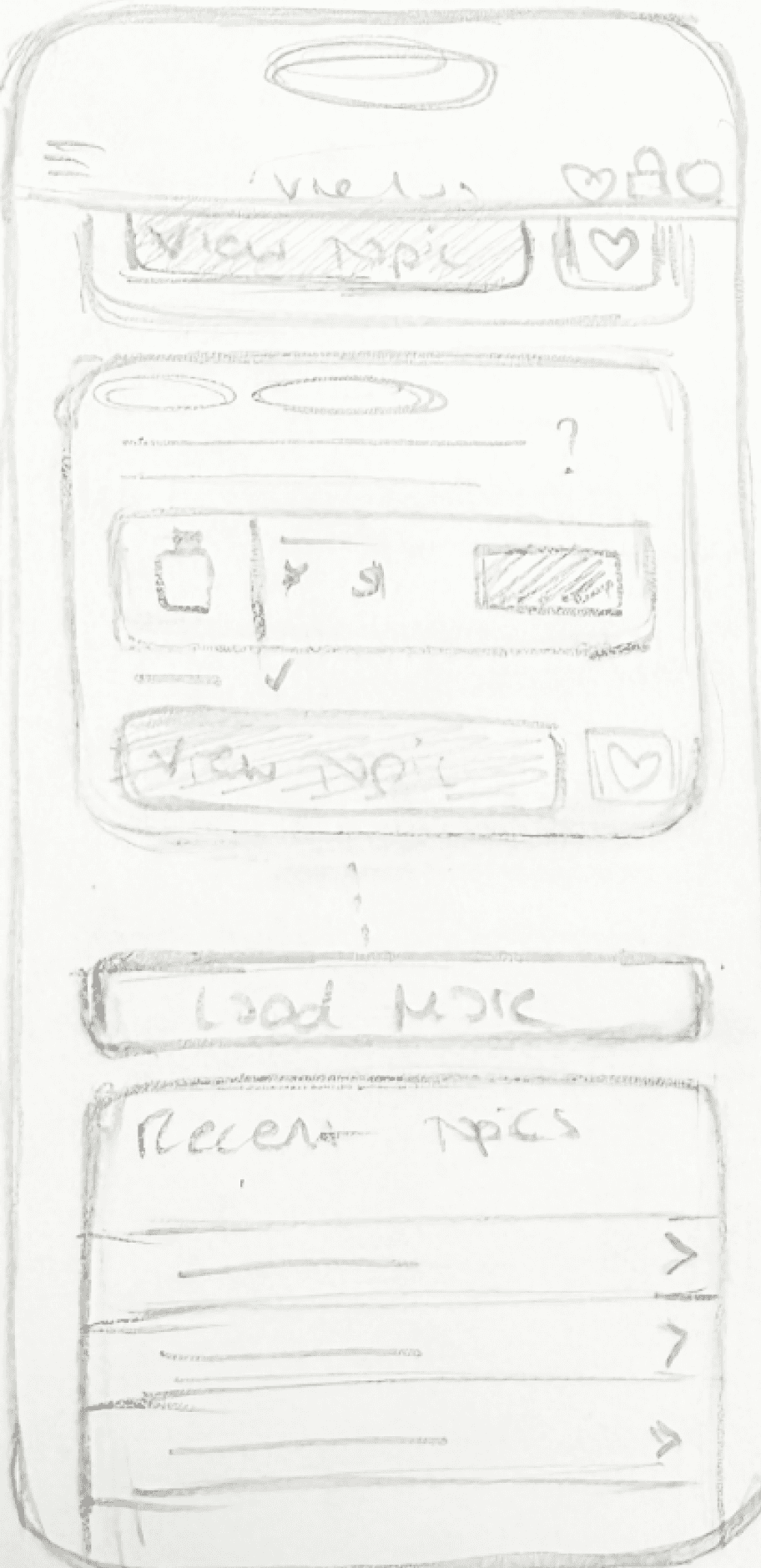
HandSkecthes
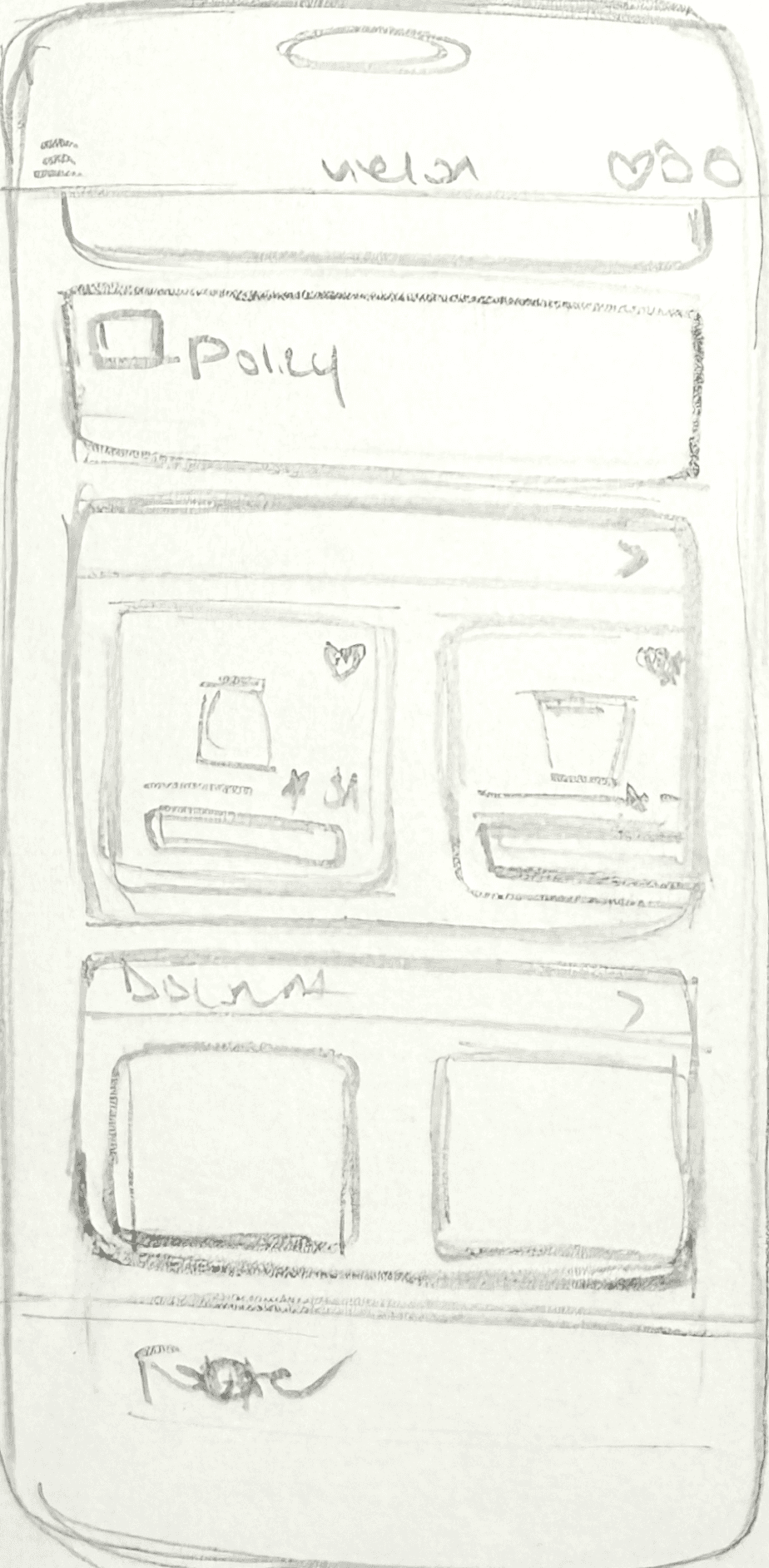
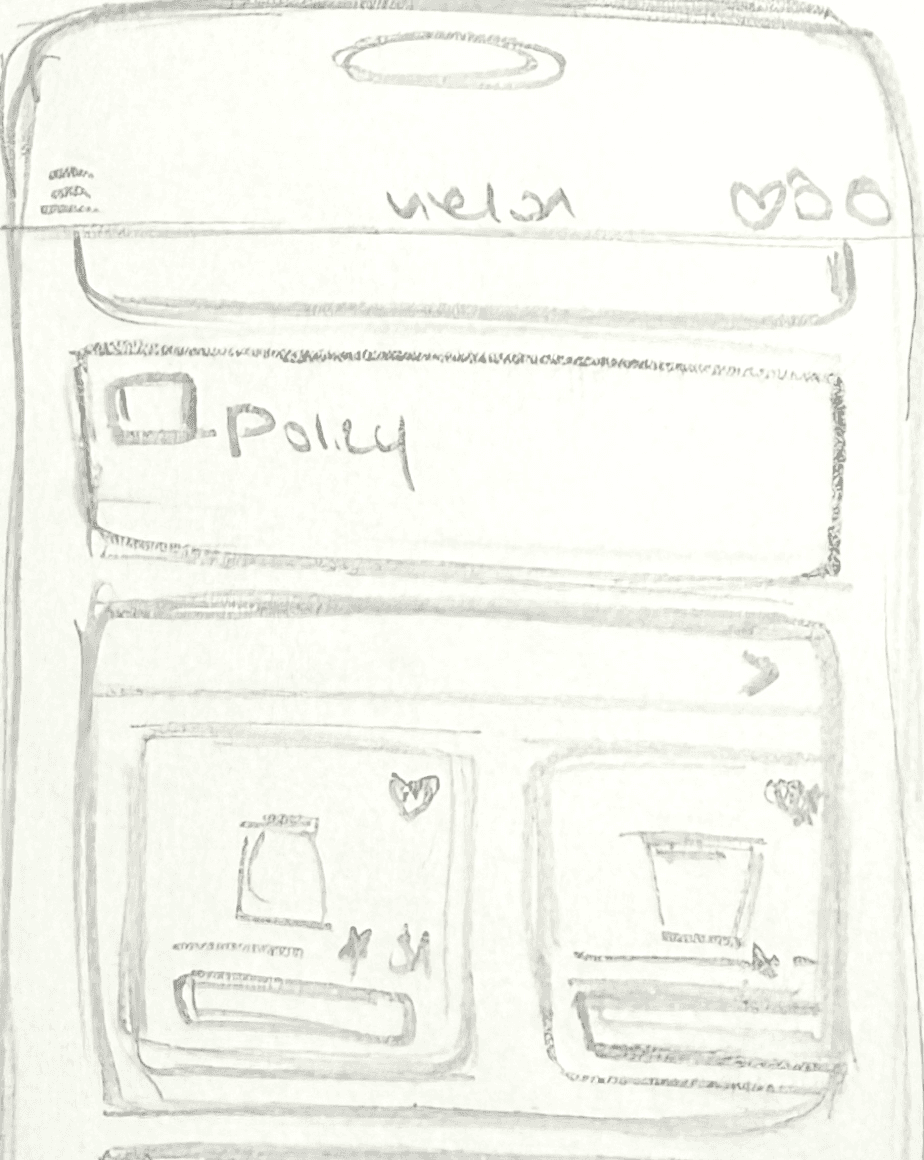
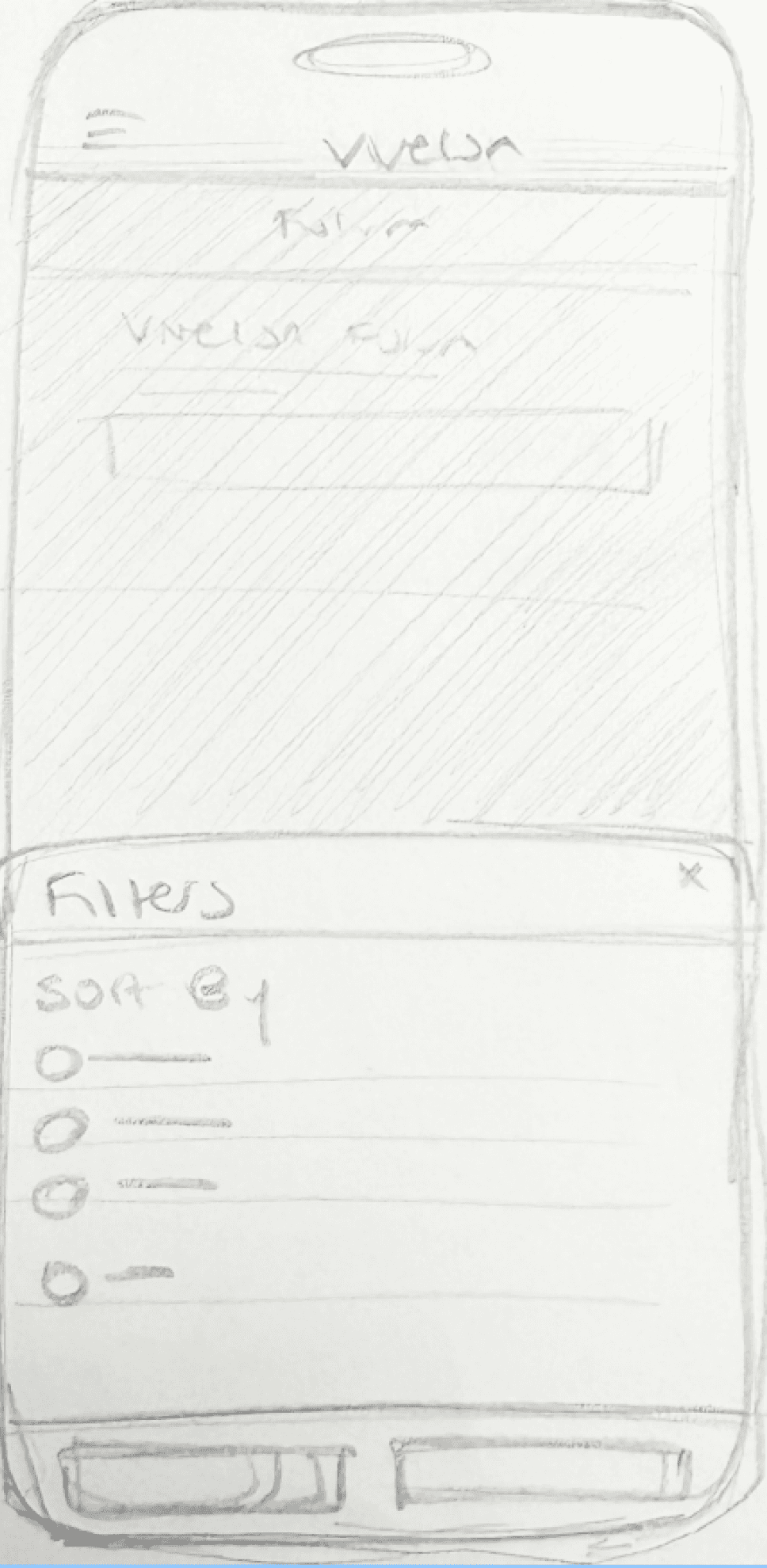
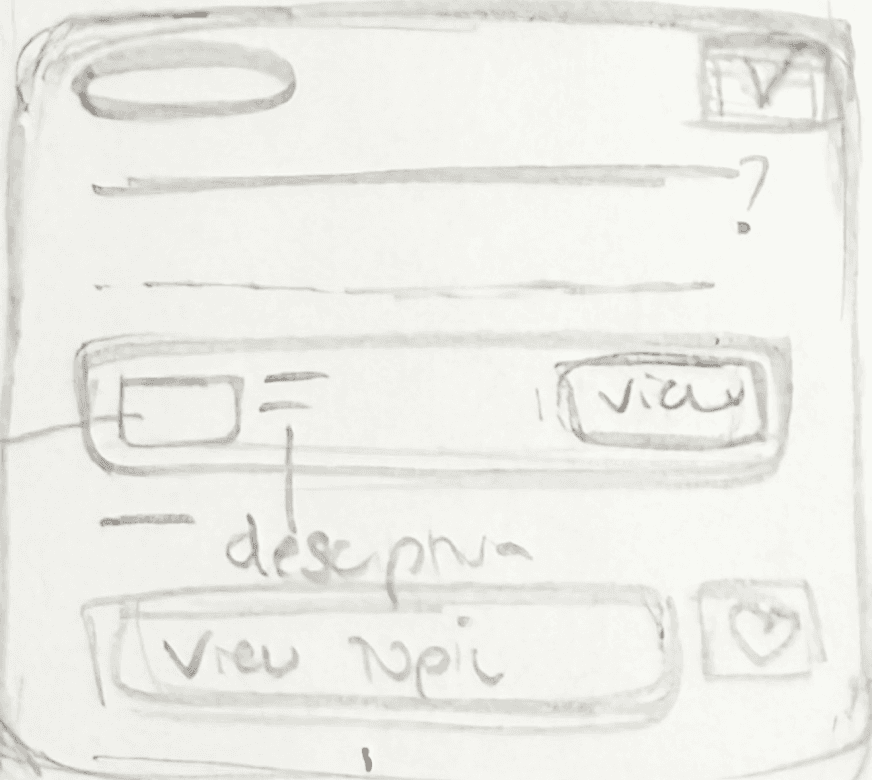
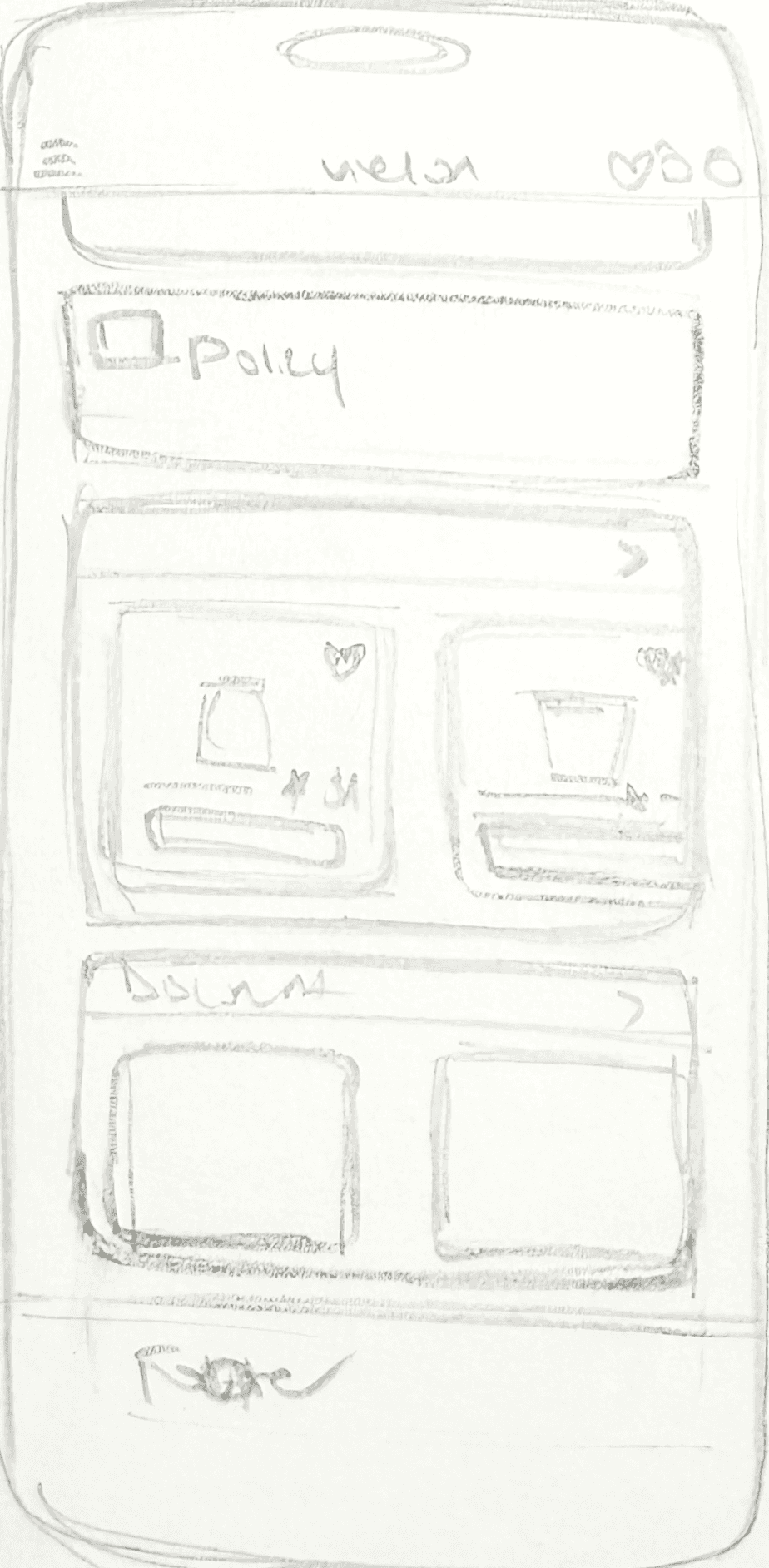
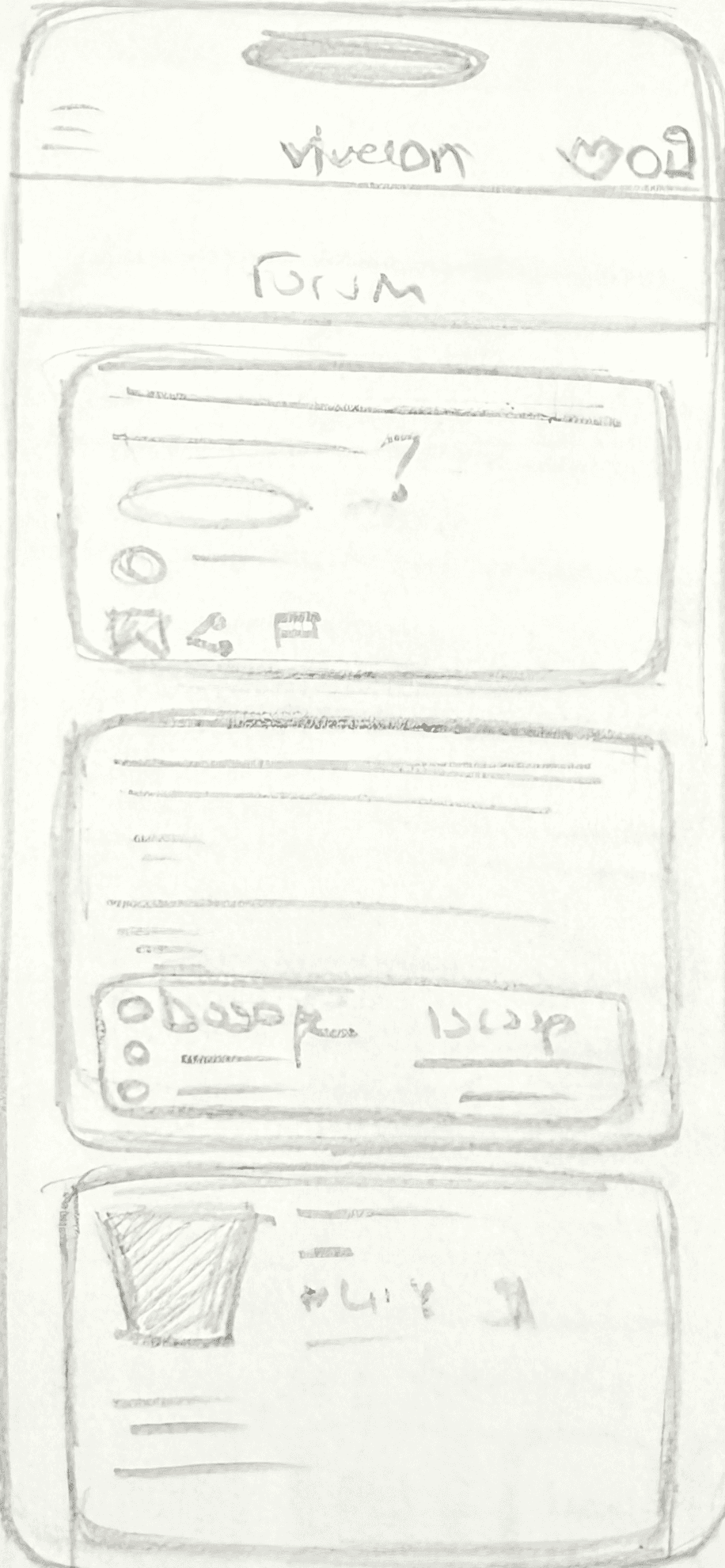
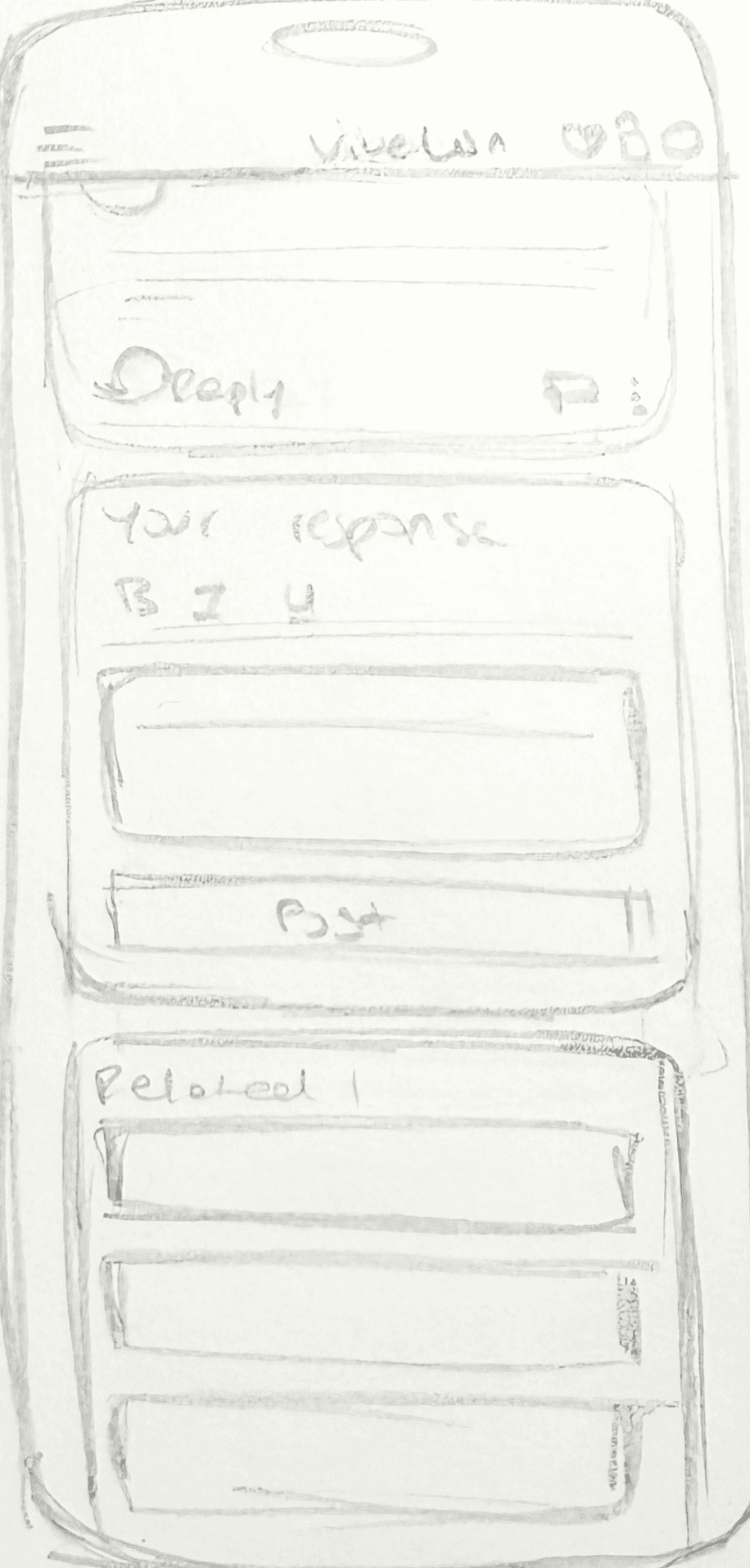
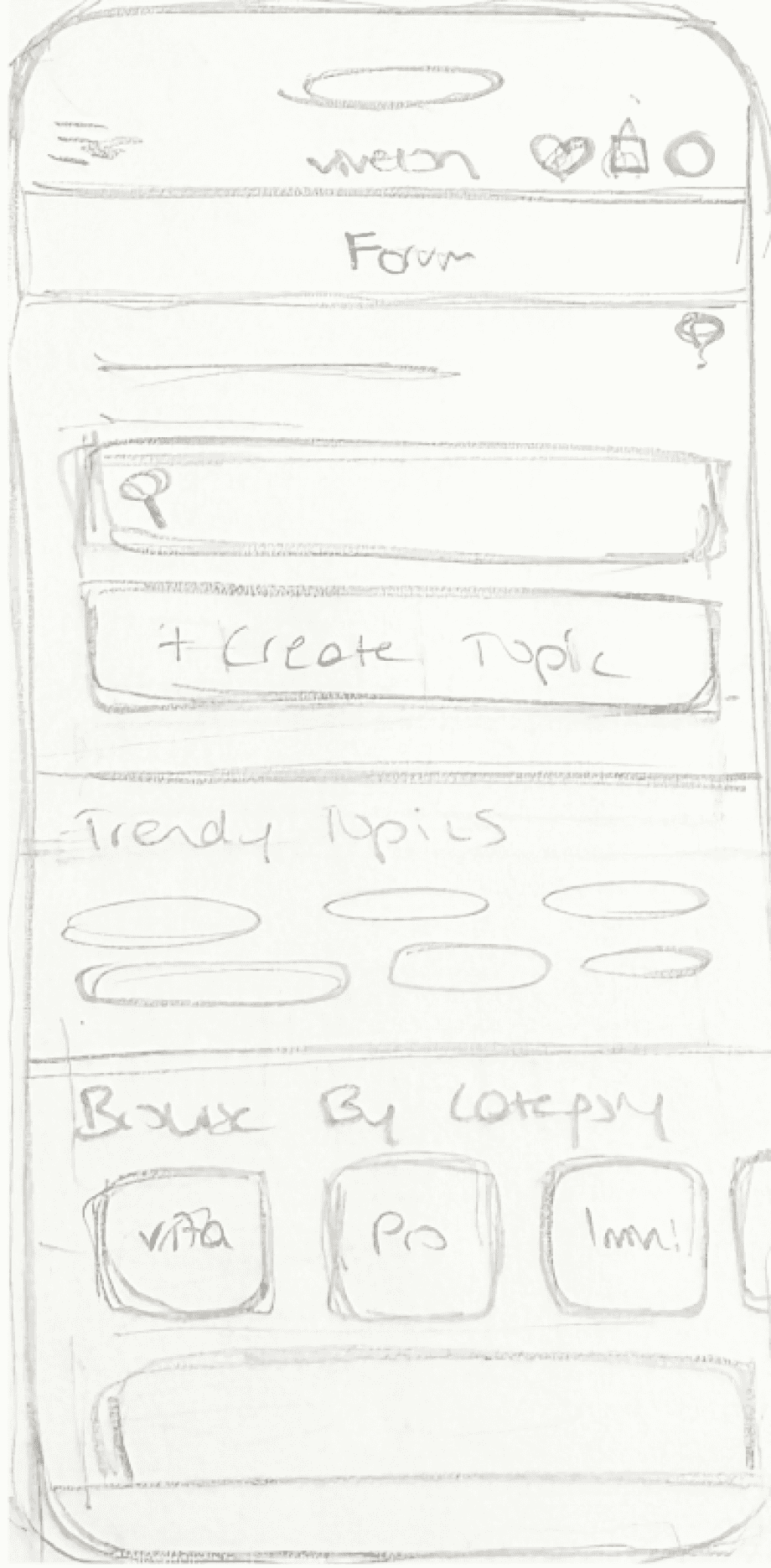
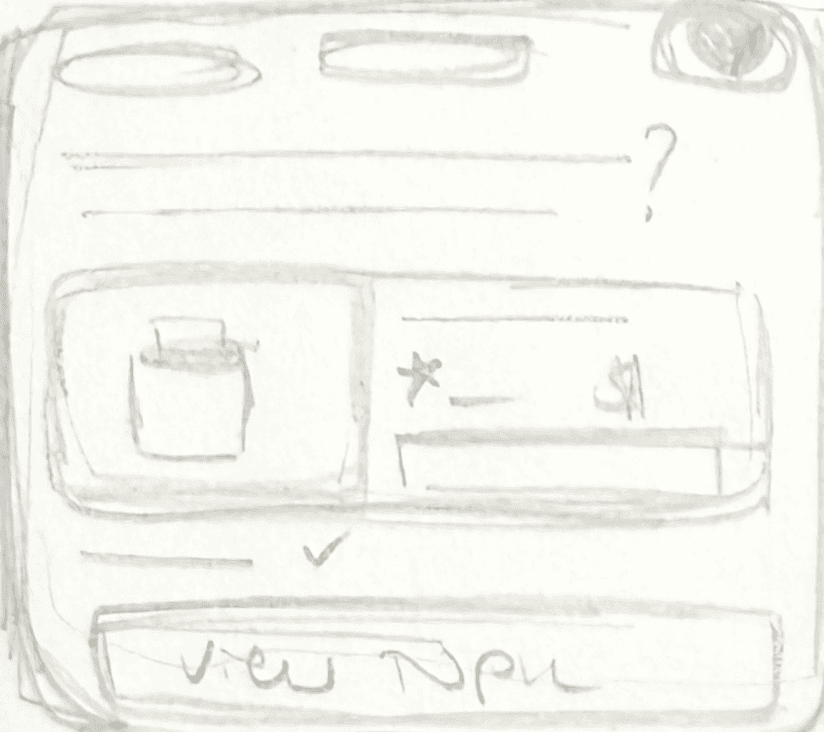
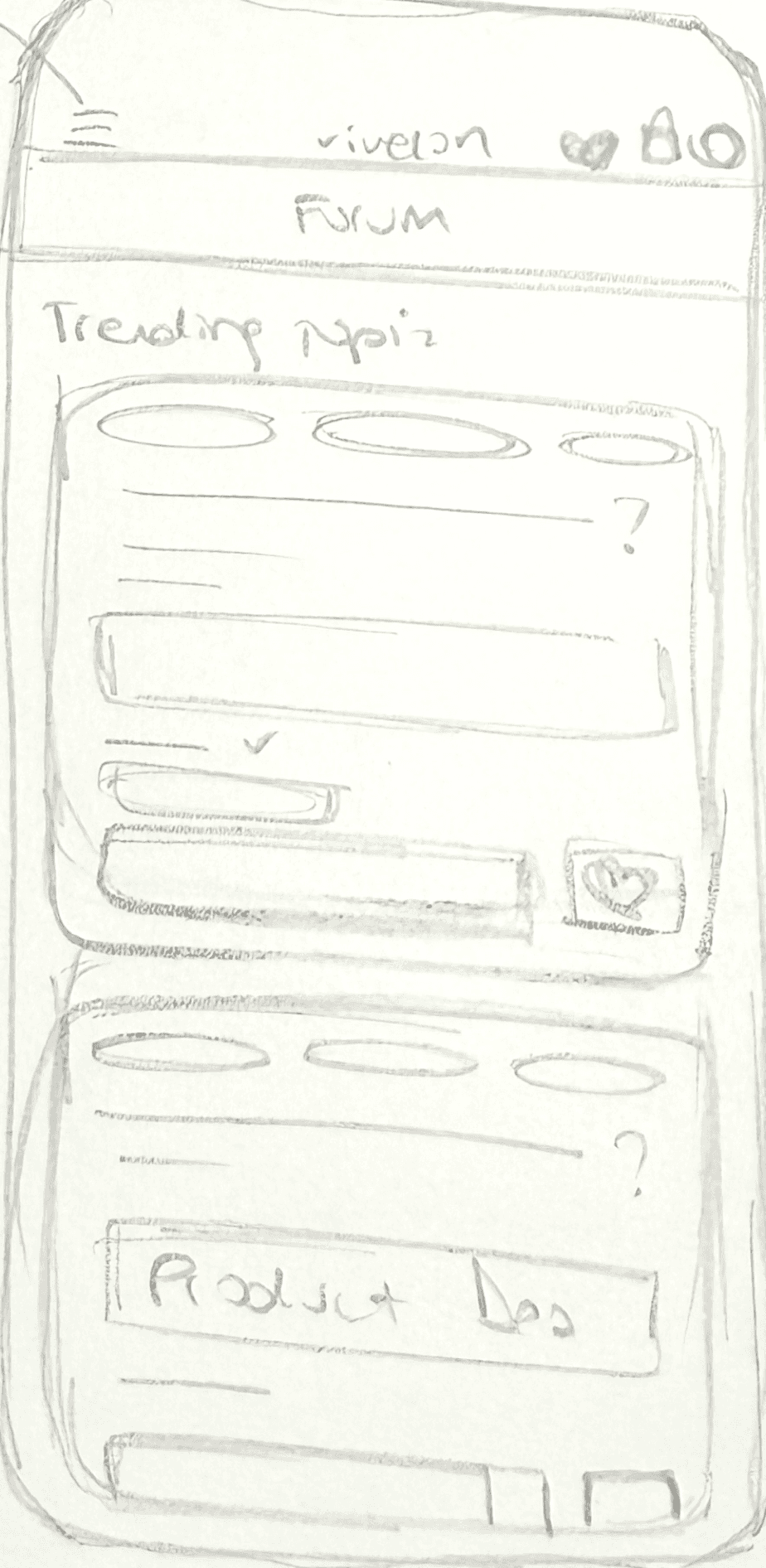
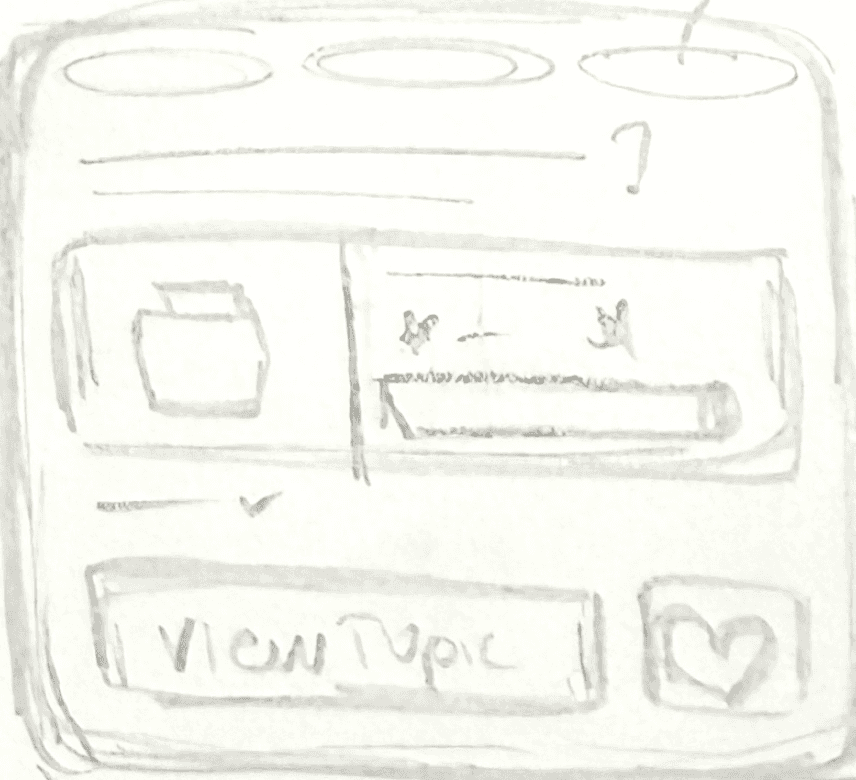
Low-fidelity wireframes were created to explore how the forum and expert cues could live naturally within the product experience.
HandSkecthes
Low-fidelity wireframes were created to explore how the forum and expert cues could live naturally within the product experience.
HandSkecthes
Low-fidelity wireframes were created to explore how the forum and expert cues could live naturally within the product experience.
Wireframes
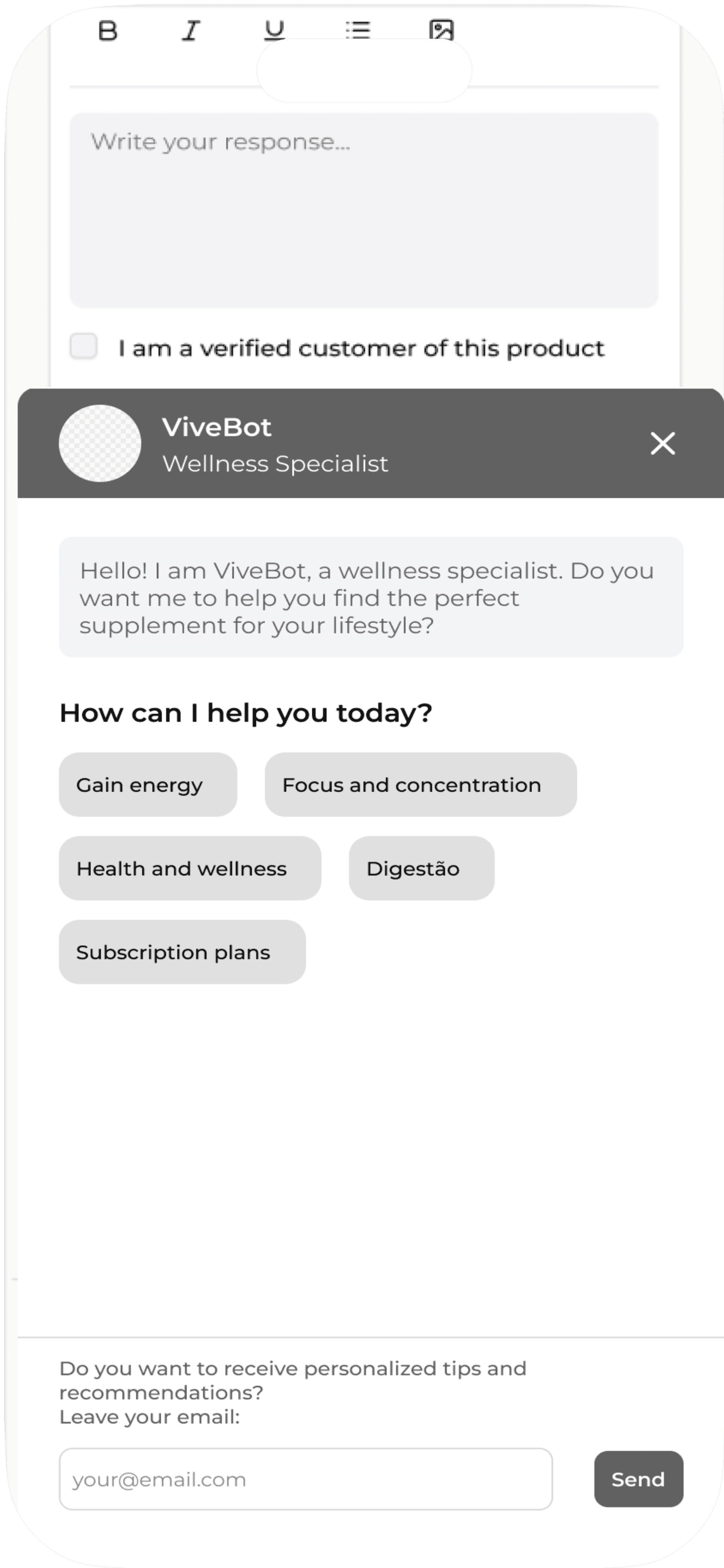
Low-fidelity wireframes were created to explore how the forum and expert cues could enhance product experience.
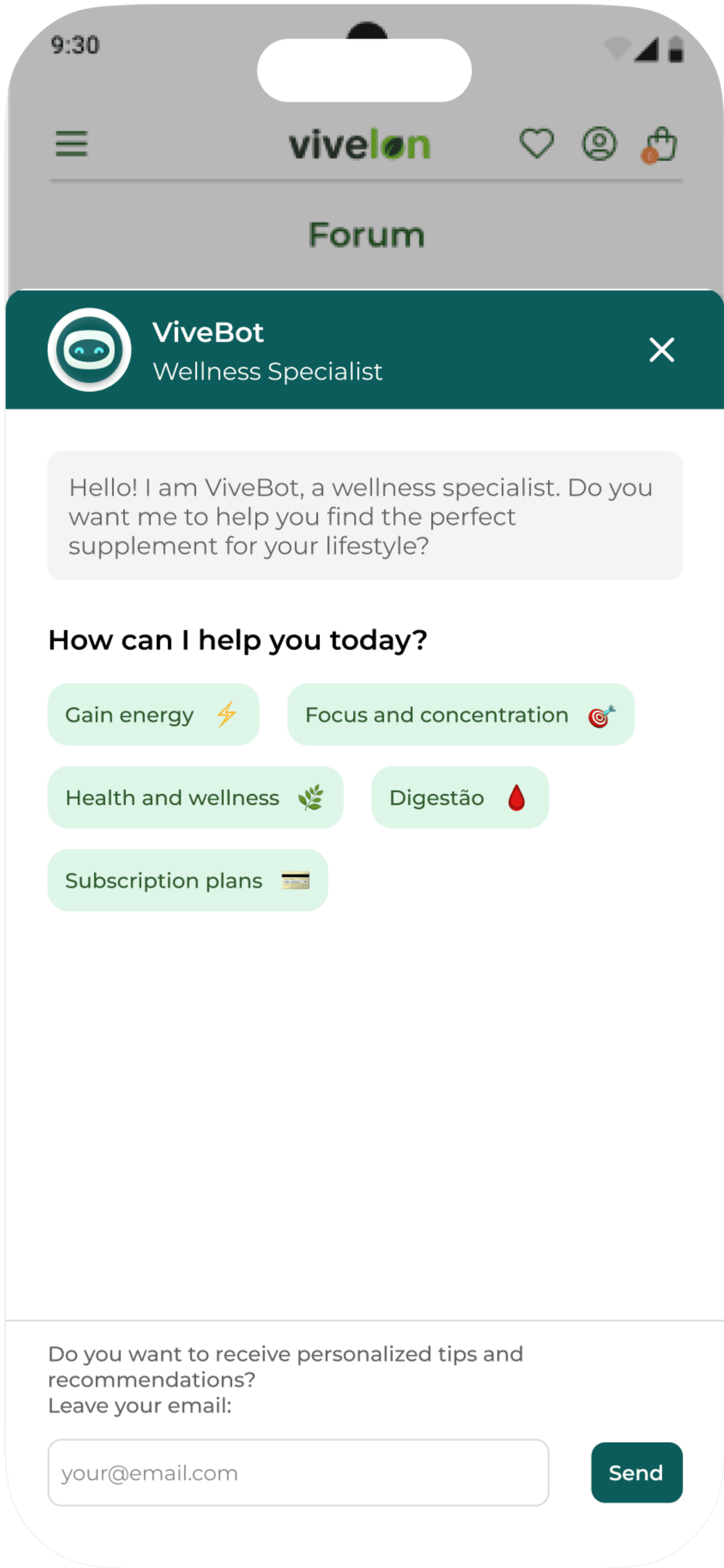
To further support hesitant users, VivaBot was introduced as a conversational assistant to:
Help users articulate concerns
Surface relevant forum discussions
Reduce friction when users were unsure how to ask questions
The goal was to make reassurance discoverable, not intrusive.
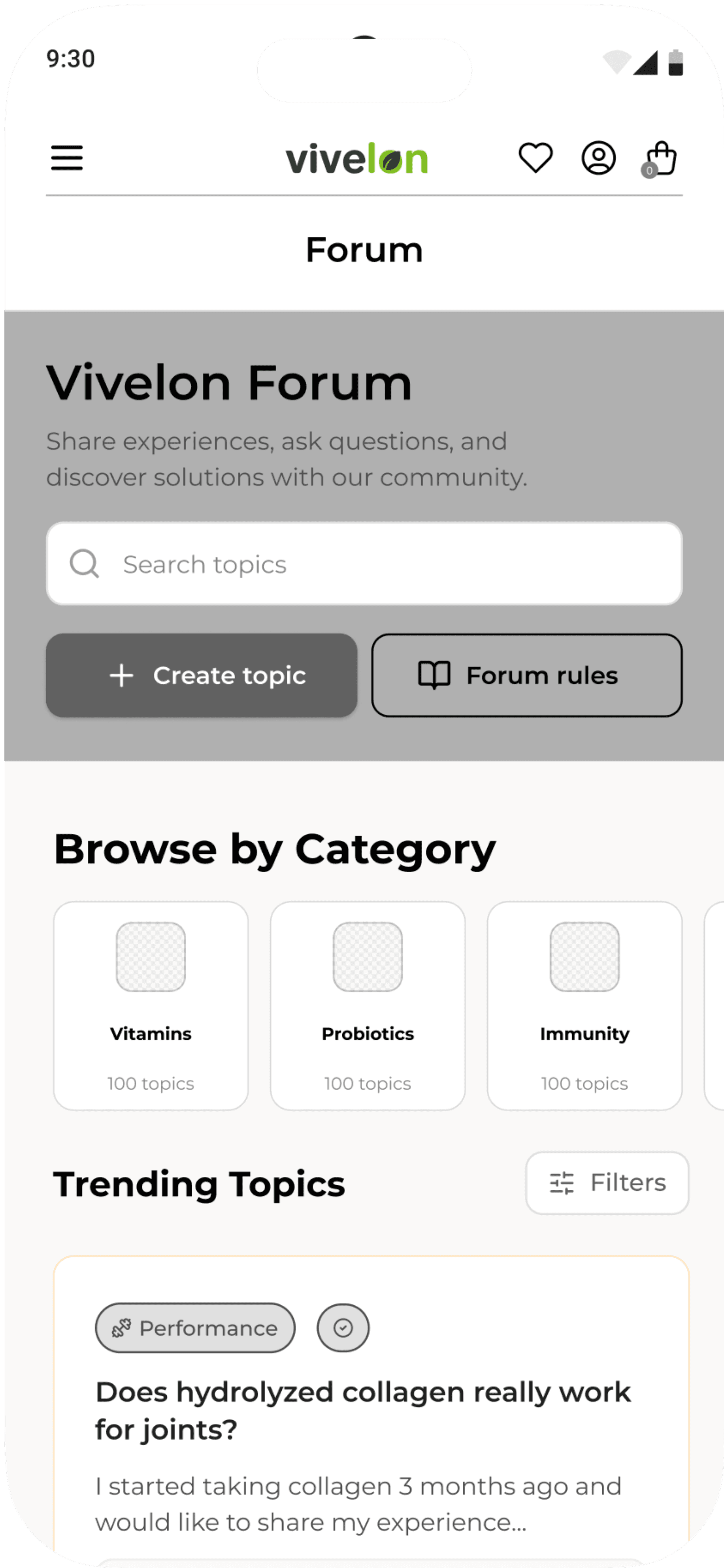
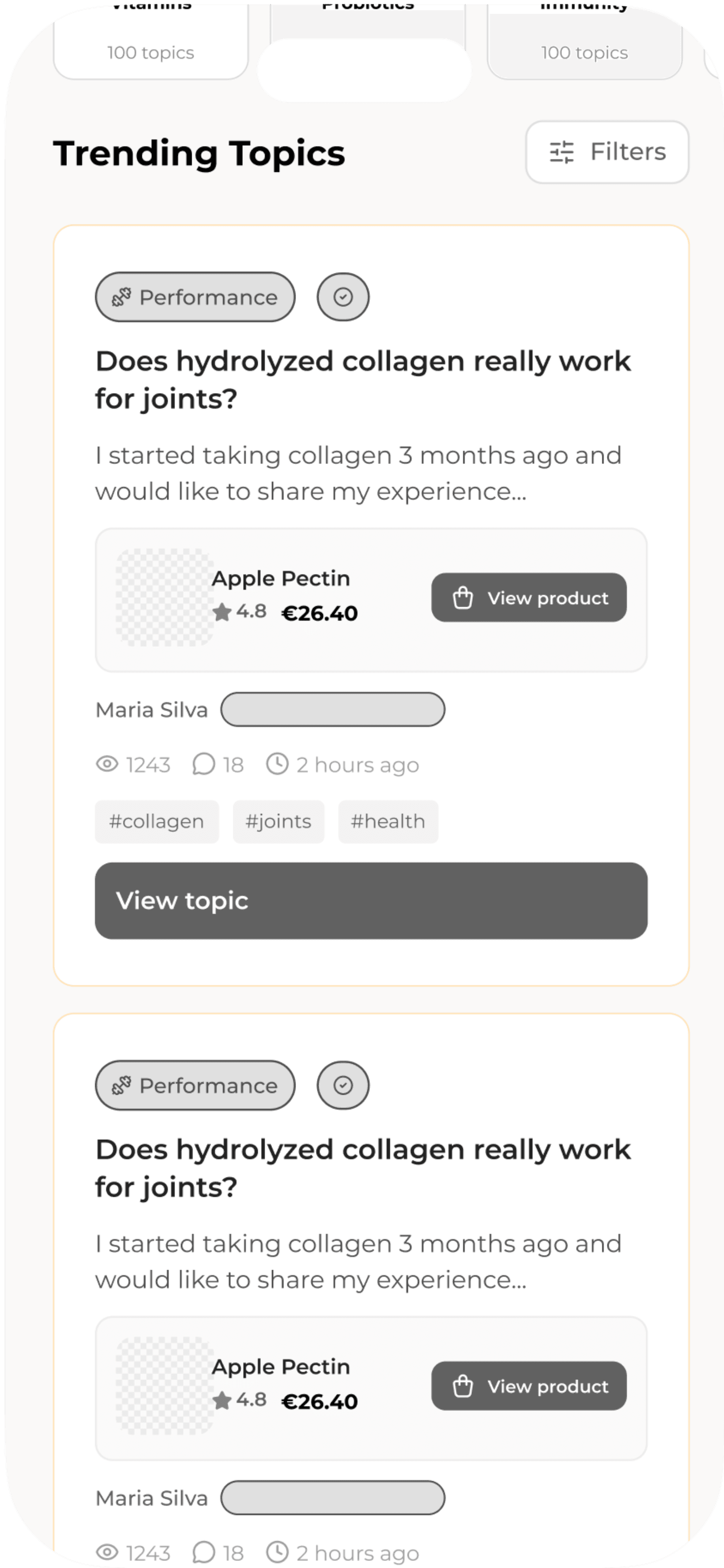
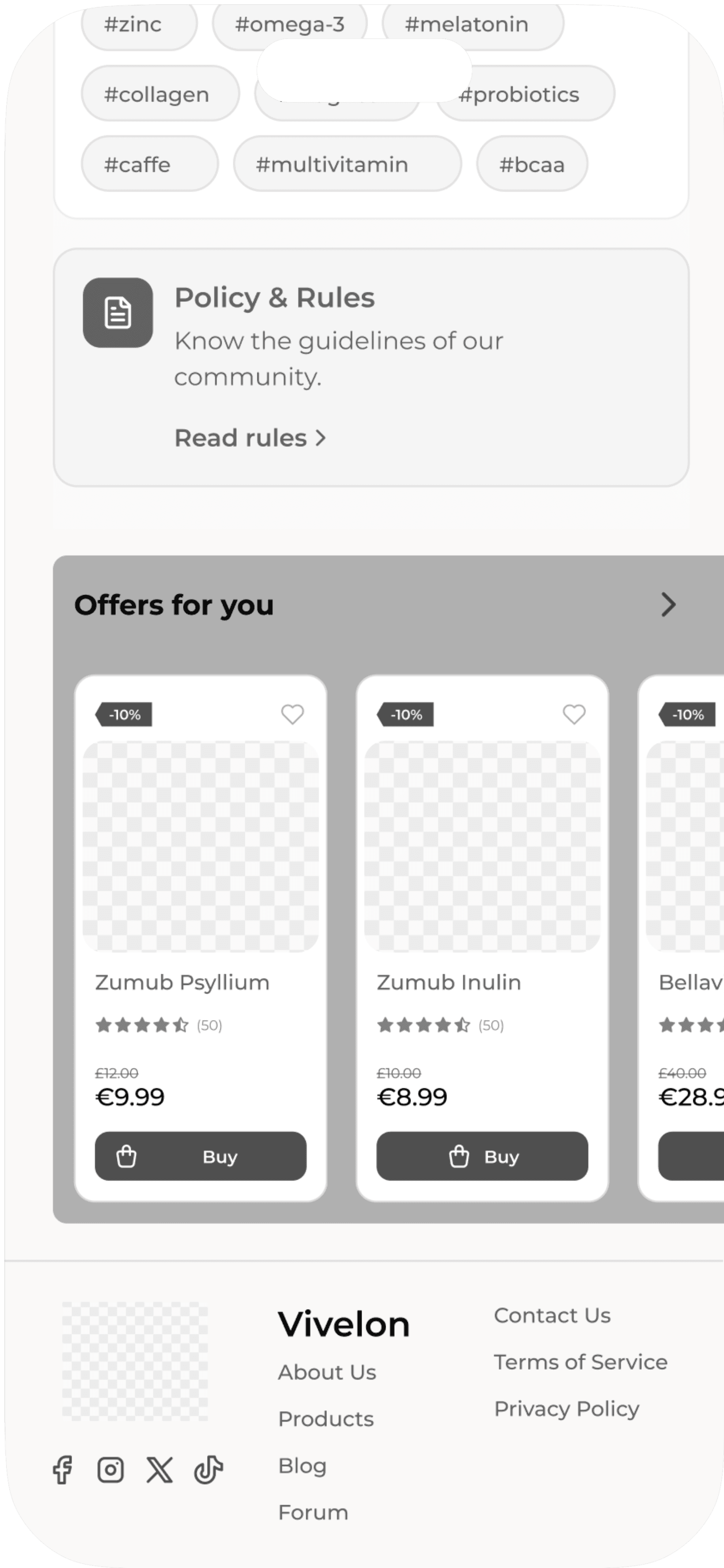
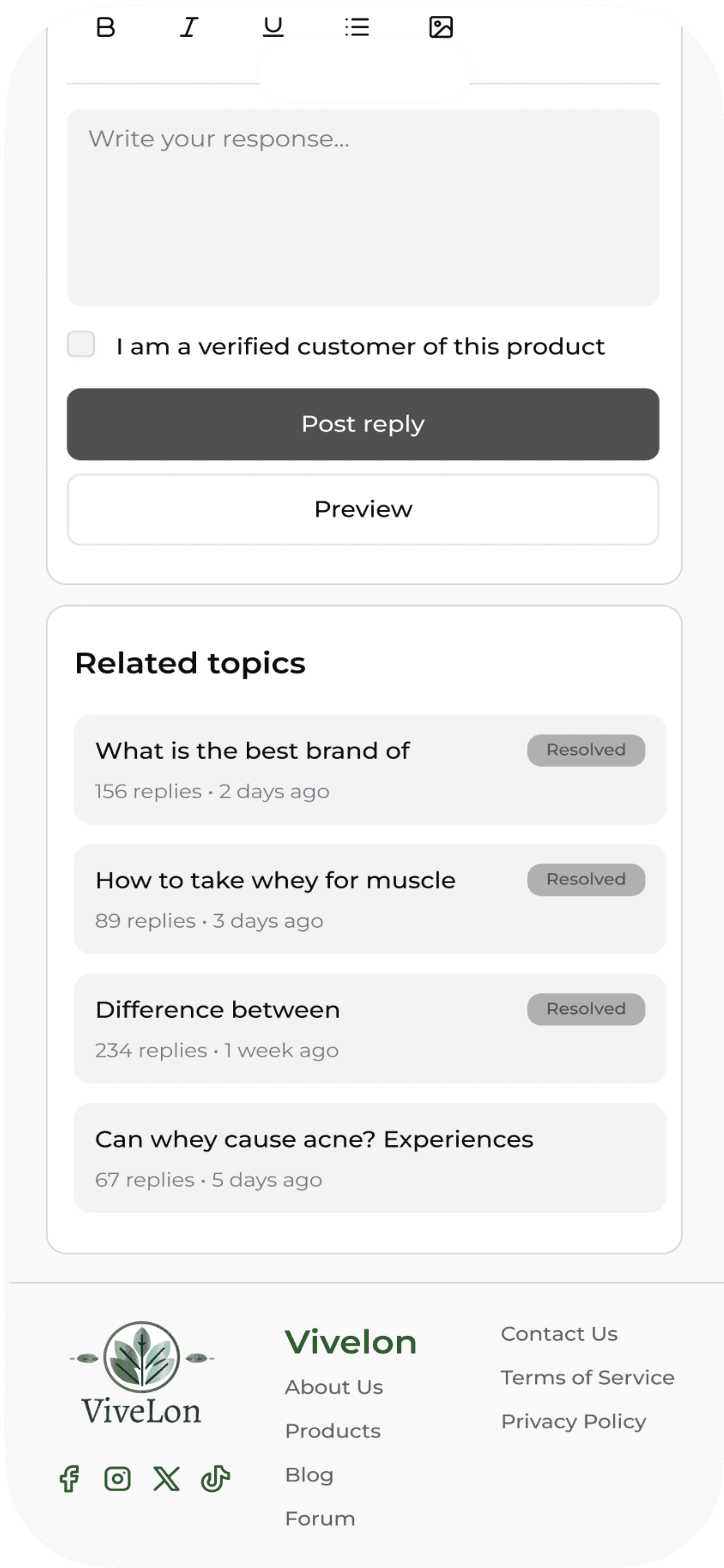
Wireframes
Low-fidelity wireframes were created to explore how the forum and expert cues could enhance product experience.
To further support hesitant users, VivaBot was introduced as a conversational assistant to:
Help users articulate concerns
Surface relevant forum discussions
Reduce friction when users were unsure how to ask questions
The goal was to make reassurance discoverable, not intrusive.
Wireframes
Low-fidelity wireframes were created to explore how the forum and expert cues could enhance product experience.
To further support hesitant users, VivaBot was introduced as a conversational assistant to:
Help users articulate concerns
Surface relevant forum discussions
Reduce friction when users were unsure how to ask questions
The goal was to make reassurance discoverable, not intrusive.

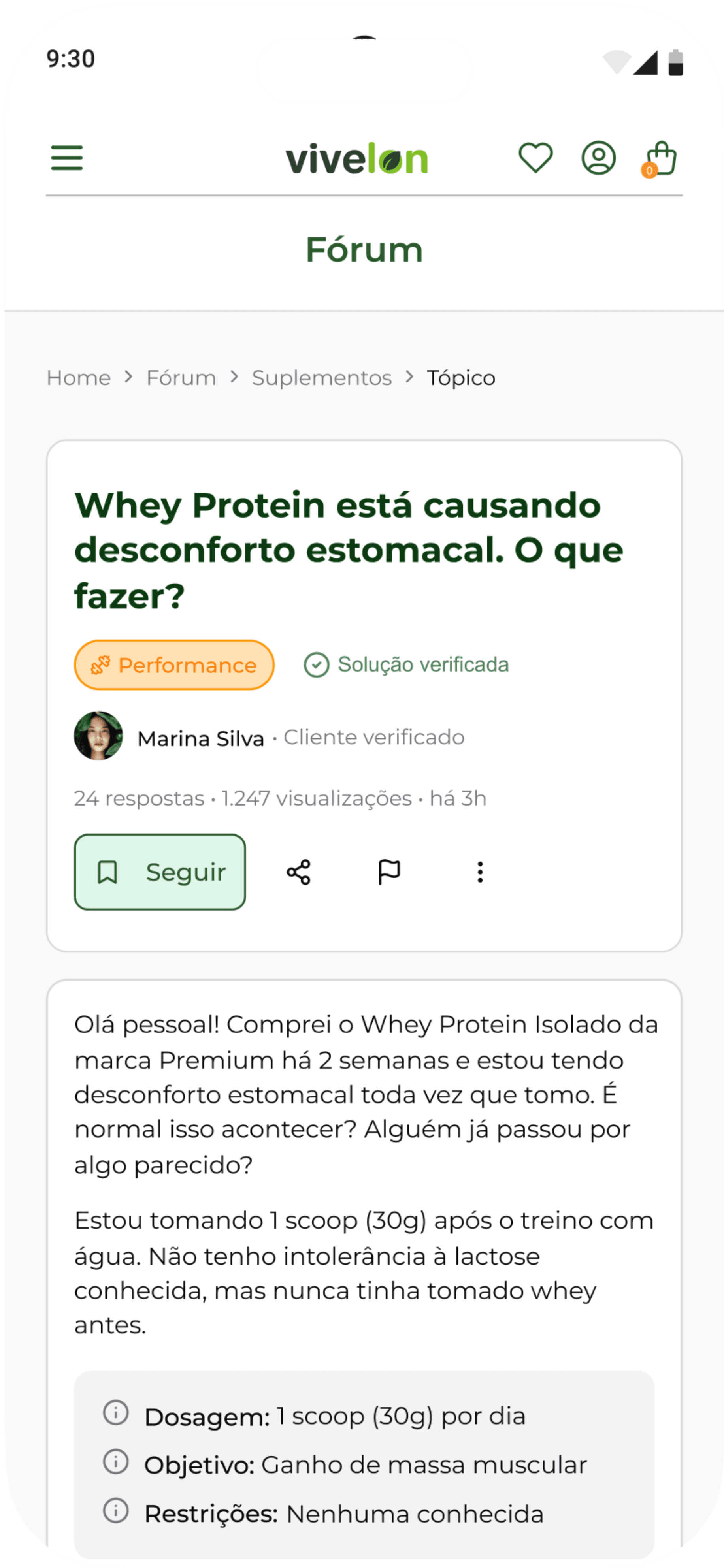
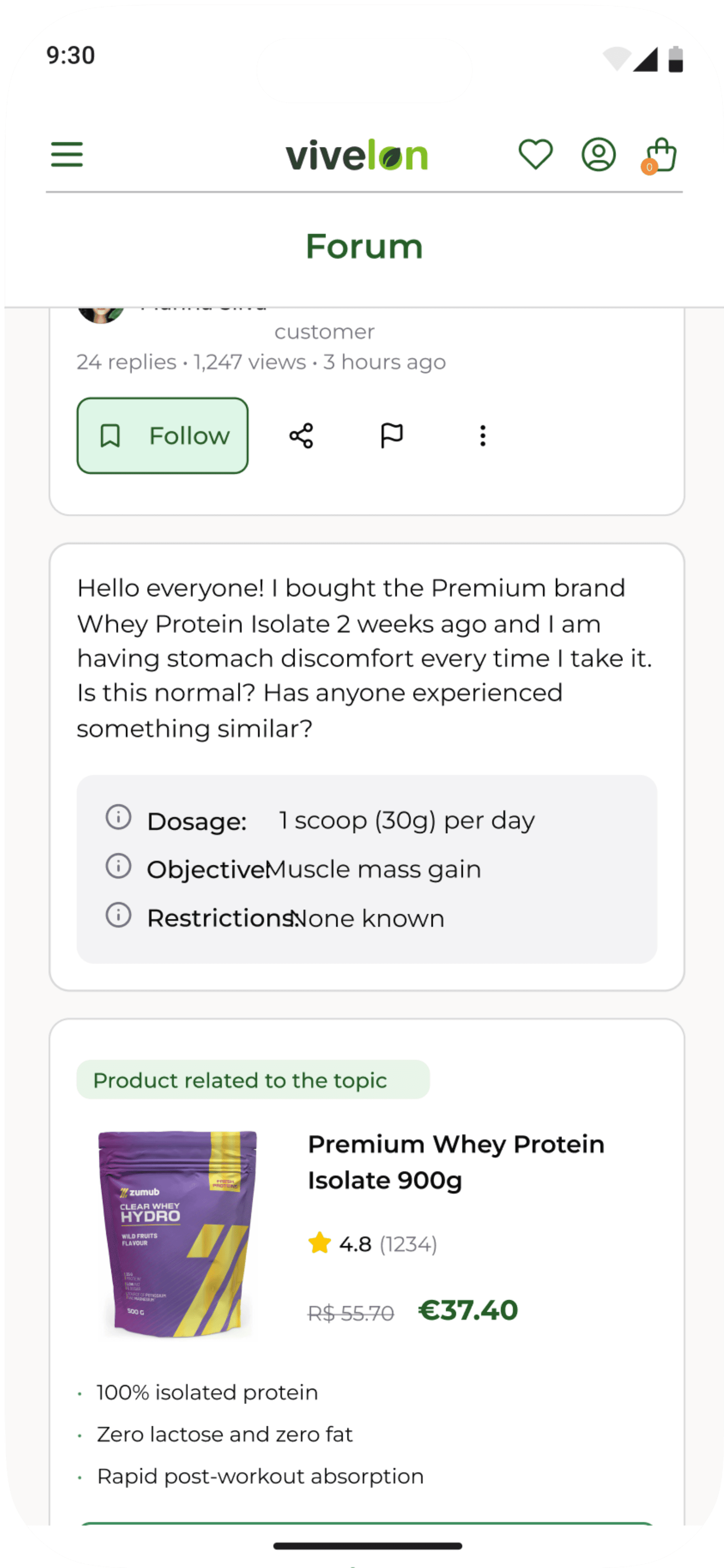
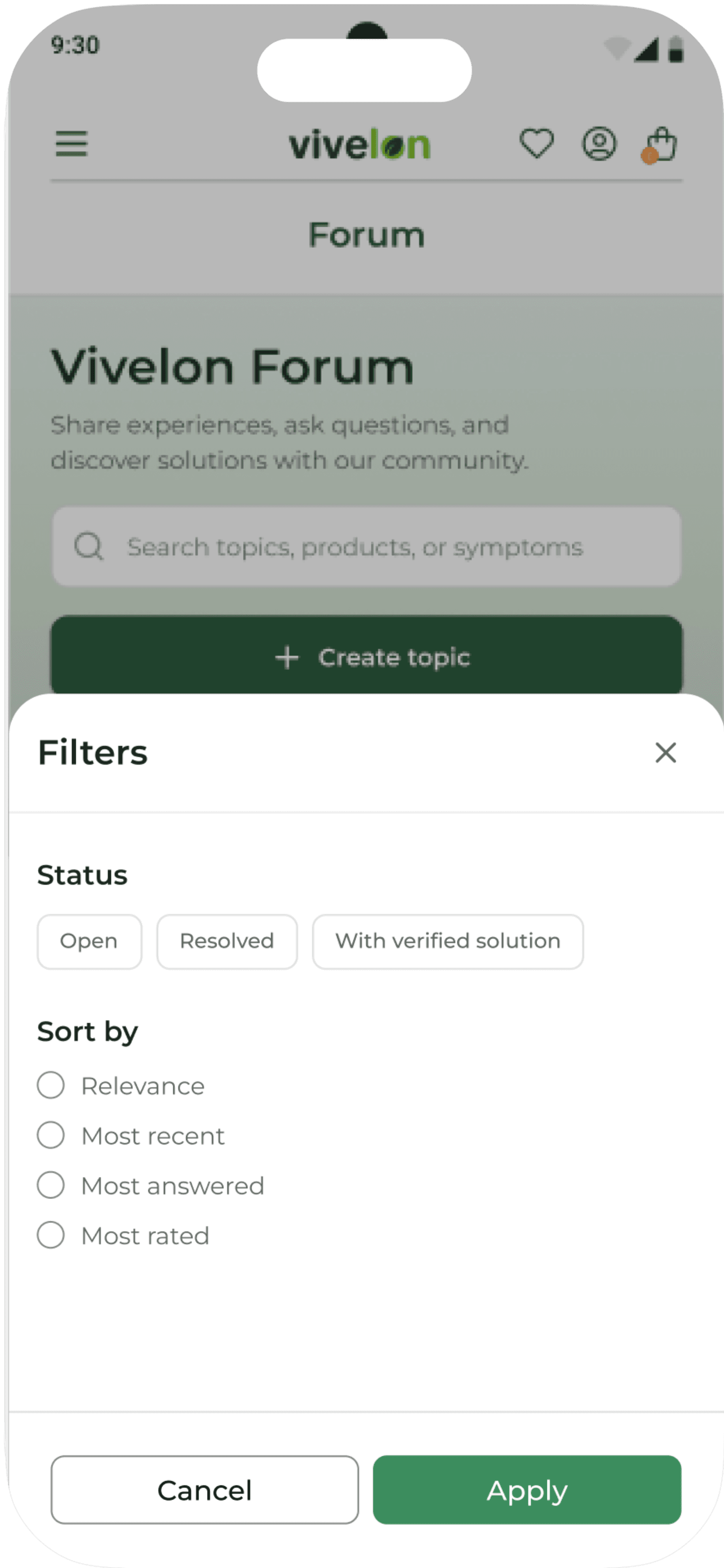
The final design integrates:
Product-linked discussion threads
Clear expert participation cues
Community experiences contextualized within product pages
The forum complements the shopping flow without interrupting it, allowing users to explore information at their own pace.
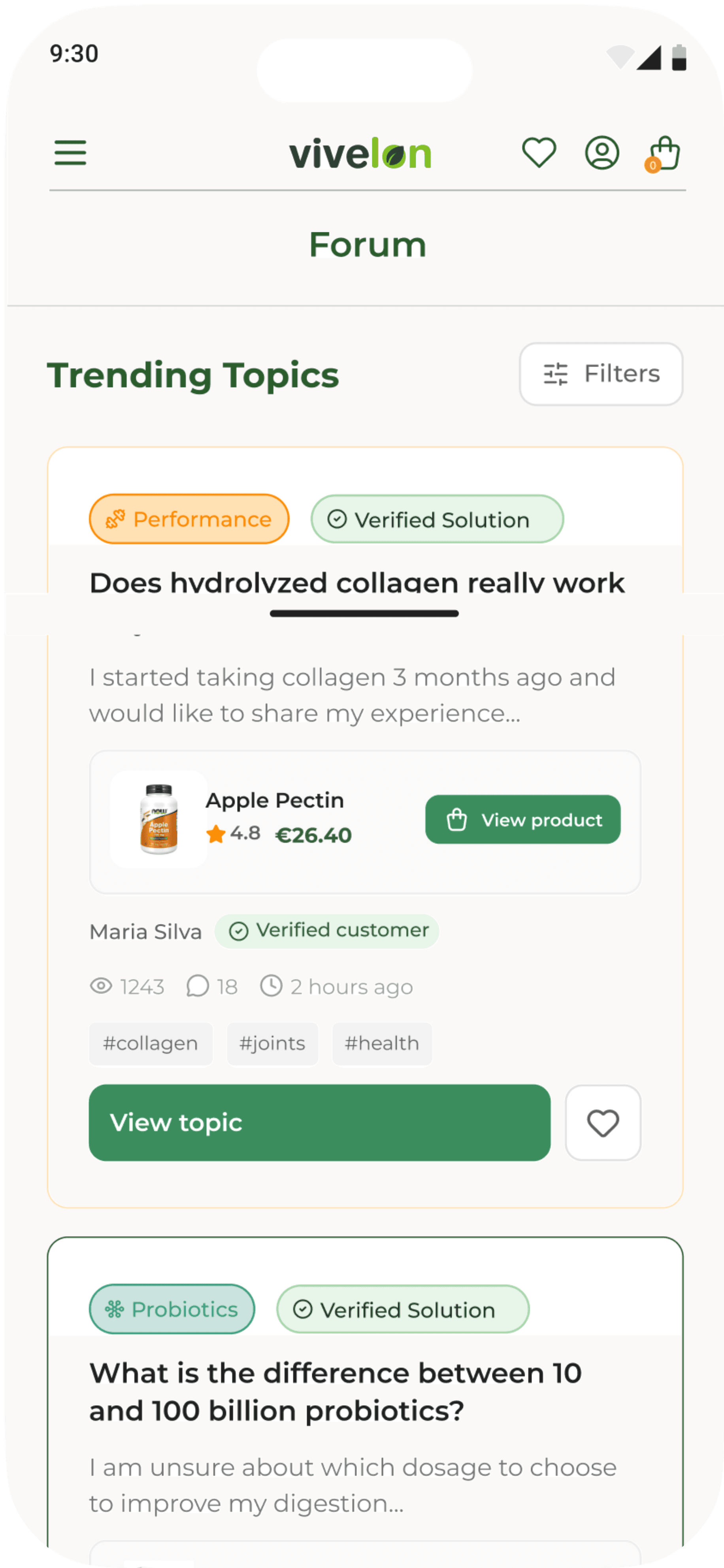
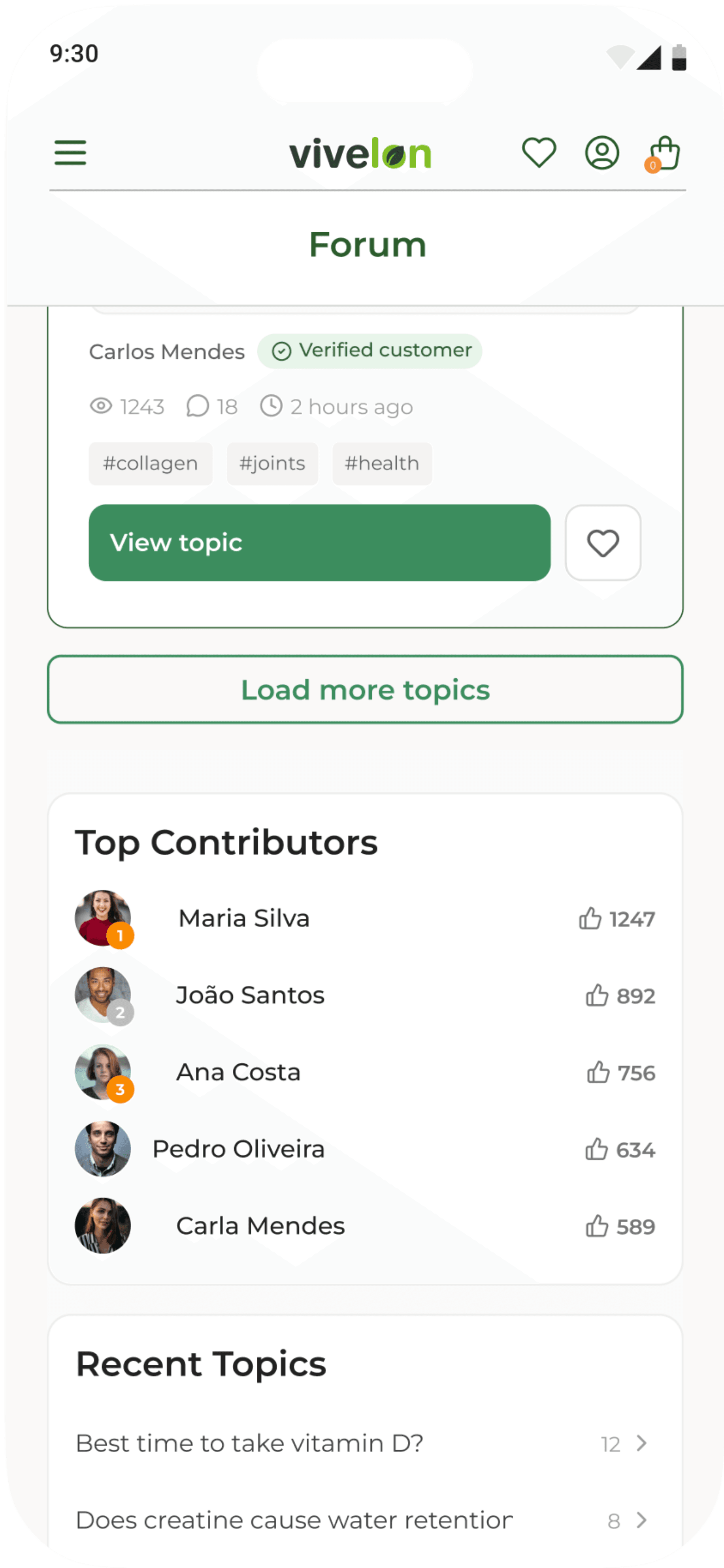
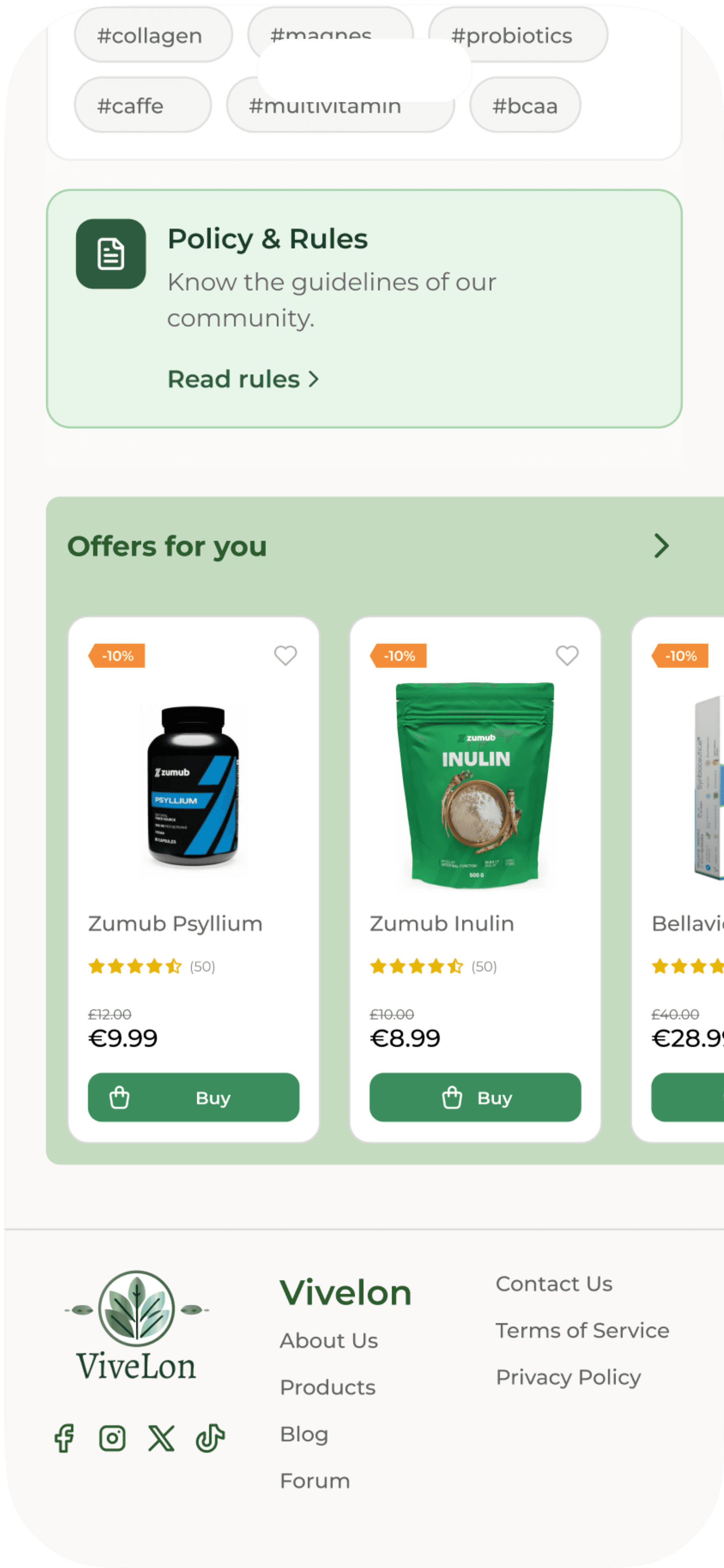
The final Design
The final design integrates:
Product-linked discussion threads
Clear expert participation cues
Community experiences contextualized within product pages
The forum complements the shopping flow without interrupting it, allowing users to explore information at their own pace.
The final Design
The final design integrates:
Product-linked discussion threads
Clear expert participation cues
Community experiences contextualized within product pages
The forum complements the shopping flow without interrupting it, allowing users to explore information at their own pace.
The final Design

Results
Results
Results
Post-launch data showed a 46% increase in sessions and deeper engagement with product pages. Users explored more content before deciding, suggesting reduced hesitation and improved confidence in wellness decision-making.
Post-launch data showed a 46% increase in sessions and deeper engagement with product pages. Users explored more content before deciding, suggesting reduced hesitation and improved confidence in wellness decision-making.
Post-launch data showed a 46% increase in sessions and deeper engagement with product pages. Users explored more content before deciding, suggesting reduced hesitation and improved confidence in wellness decision-making.

My Takeaways
This project demonstrated that:
UX can play a critical role in building trust in health contexts
Community-driven design supports confidence more effectively than static informatio
Designing for reassurance requires slowing down, not simplifying away meaning.
My Takeaways
This project demonstrated that:
UX can play a critical role in building trust in health contexts
Community-driven design supports confidence more effectively than static informatio
Designing for reassurance requires slowing down, not simplifying away meaning.
My Takeaways
This project demonstrated that:
UX can play a critical role in building trust in health contexts
Community-driven design supports confidence more effectively than static informatio
Designing for reassurance requires slowing down, not simplifying away meaning.